San Francisco Housing Market Update: Why Local Buyers Still Face Competition
November 2, 2026

November 2, 2026
October 2026 • Based on September 2026 market data
If you’ve been following the national housing headlines, you might expect buyers to have plenty of choices and sellers to be ready to negotiate. Here in San Francisco, the September numbers tell a different story.
Single-family homes and condos both posted substantial year-over-year increases in median sale price. Supply remained limited, and homes sold quickly. For anyone planning a move, the useful question is: What is happening with homes like the one you want to buy or sell?
The quick take: San Francisco’s single-family median reached $2,054,000, condos reached $1,316,500, and local supply remained well below the national level. Preparation matters on both sides of the transaction.
According to the National Association of REALTORS® September report, the national median existing-home price was $417,500, up 1.3% from a year earlier. Inventory stood at approximately 1.6 million homes, representing 4.8 months of supply.
That helps explain why national discussions focus on improving buyer choice. A cooling market can still see year-over-year price gains; cooling doesn't mean prices are falling everywhere.
In San Francisco, our October newsletter reports a median single-family sale price of $2,054,000, up 18.4% year over year, and a median condo sale price of $1,316,500, up 18.9%.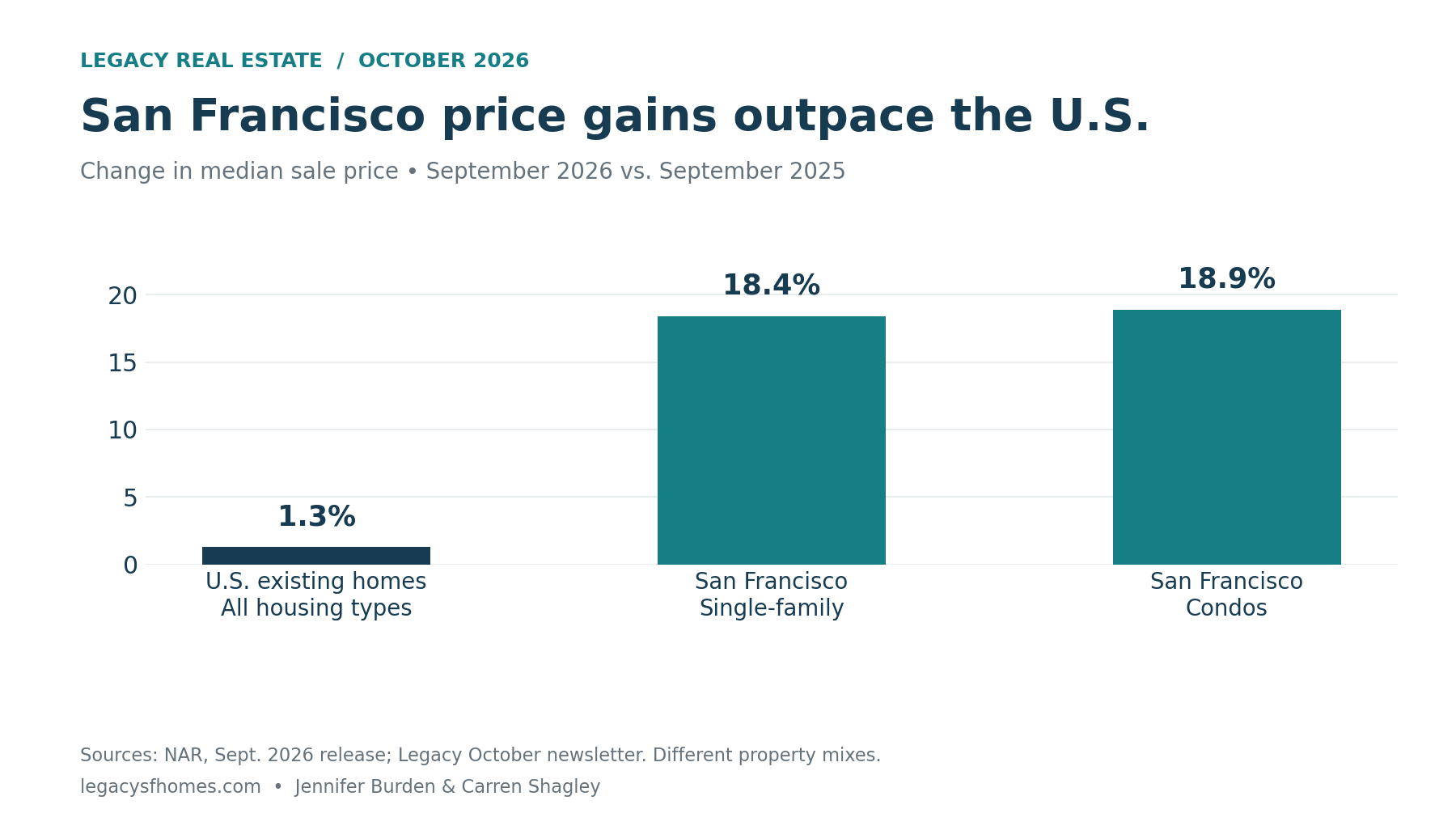
These figures describe different property groups. The national total includes several housing types, while the San Francisco figures separate houses and condos. They provide context, rather than a direct comparison of equivalent homes.
Also, a higher median does not mean every property gained that percentage in value. The median is the midpoint of completed sales, and changes in the mix of homes sold can move it. Your home’s value depends on its own features and relevant comparable sales.
San Francisco had just 1.2 months of single-family supply and 2.0 months of condo supply, according to the newsletter. Available listings were approximately 25% lower for houses and 34% lower for condos than a year earlier.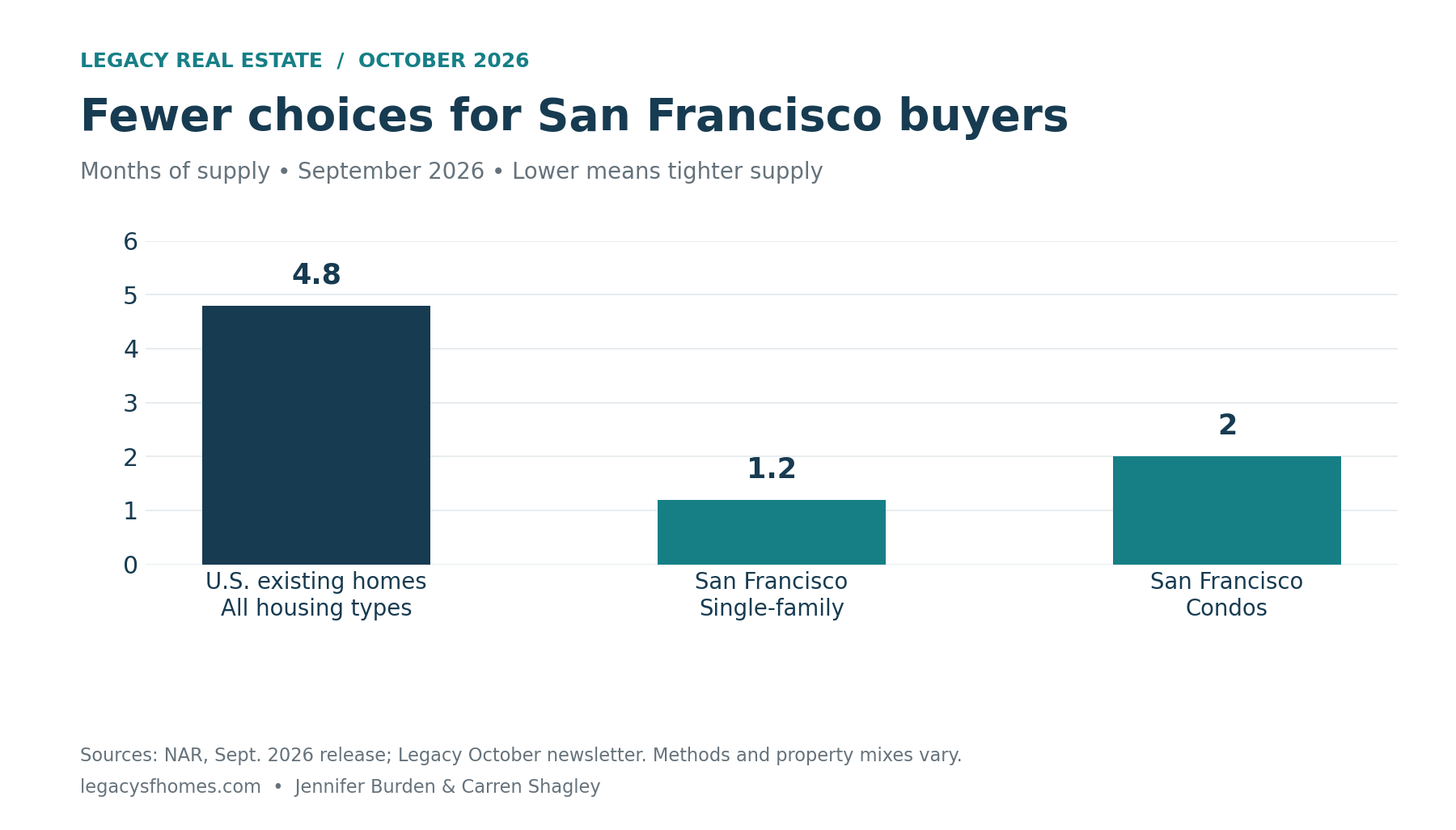
Months of supply estimates how long the available inventory would last at the current sales pace. It measures market balance, not how long an individual property will take to sell. Local and national calculations may differ, but the gap helps illustrate how constrained buyers’ choices remain here.
That scarcity can spark competition when a home matches what several buyers want. Still, condition, layout, location, price, and—in a condo—HOA costs and building circumstances all shape the response.
The newsletter reports that single-family homes averaged 12 days on the market, down from 13 a year earlier. Condos averaged 14 days, down from 26 days in September 2025.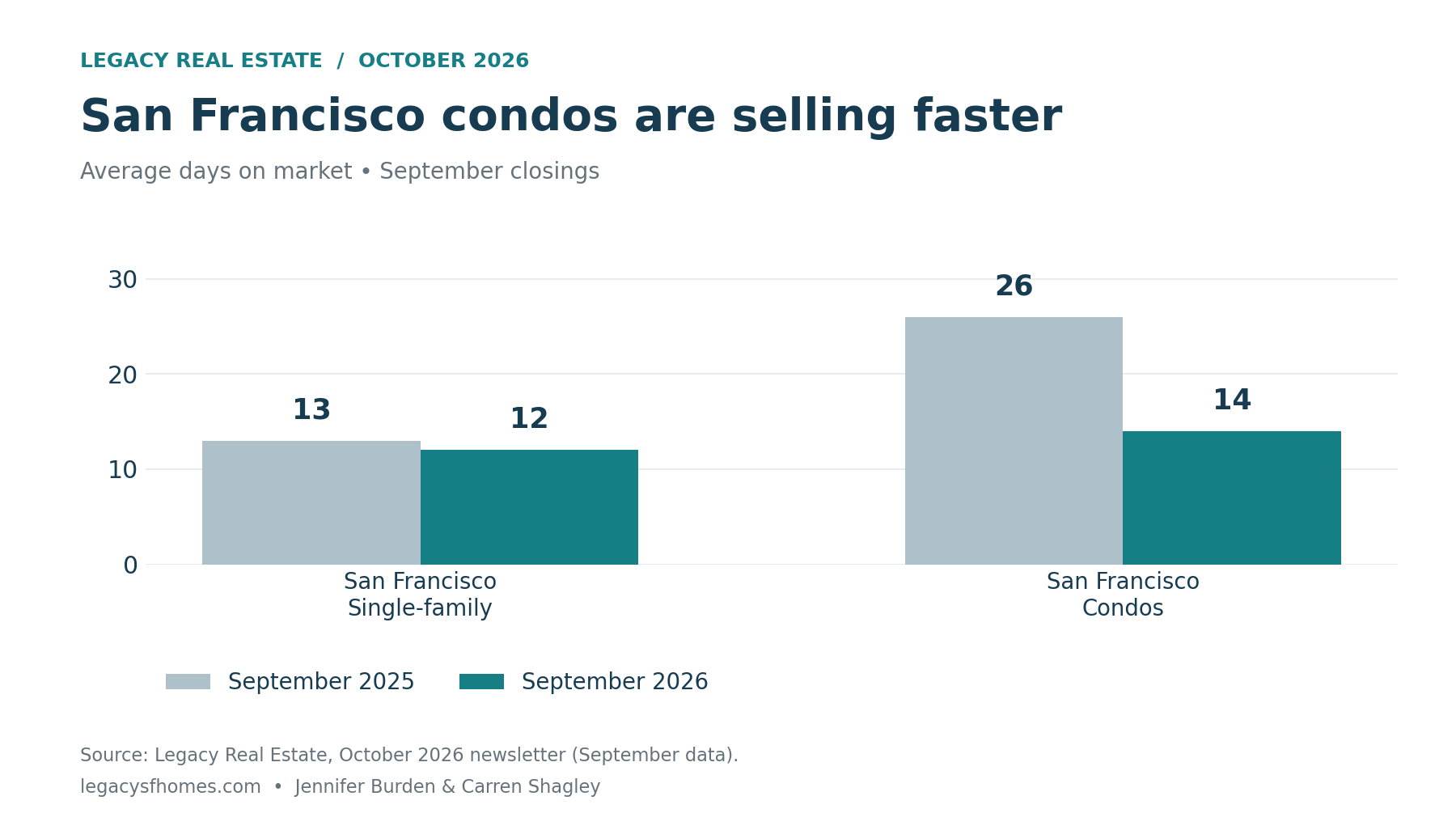
That is a meaningful change for buyers who may still be working from an older impression of the condo market. A home with the right combination of location, layout, building condition, and monthly costs can attract attention quickly.
At the same time, citywide averages cannot describe every building. Buyers should consider the total cost of ownership and review HOA documents, reserves, insurance, and potential assessments alongside the purchase price. Our San Francisco buyer resources are a starting point for planning the process.
In September, single-family homes sold for an average of 31% above the original asking price, up from 14% a year earlier. Condos averaged 10% above the original asking price, up from 1% in September 2025, according to the newsletter.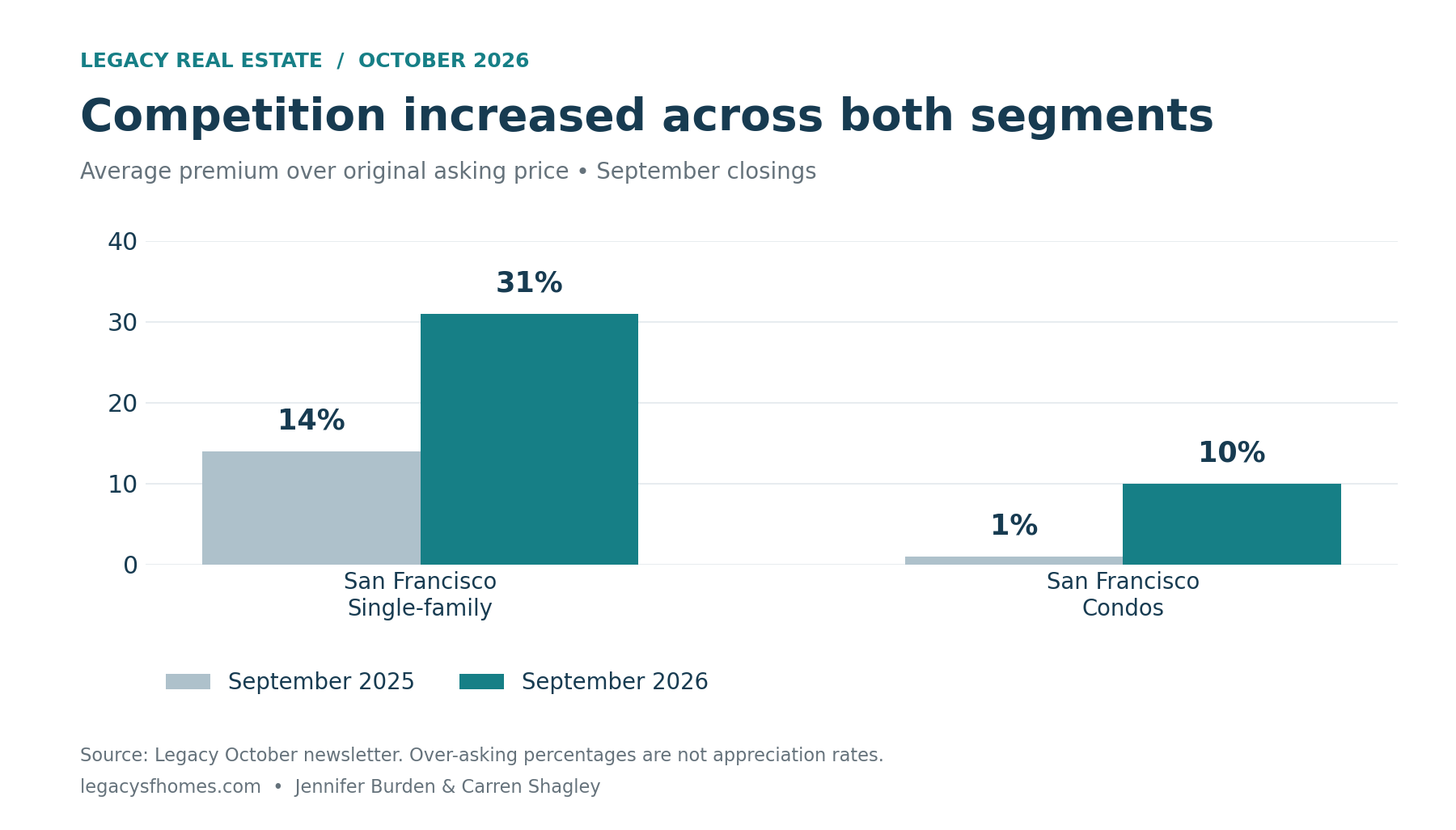
Those numbers reflect both competition and the original pricing strategy. A property listed below its likely market value may sell substantially over asking without selling above what comparable homes support.
For example, a hypothetical home listed at $1.5 million and sold at $1.8 million would sell 20% over asking. That alone would not establish a 20% increase in its market value. Buyers need a value range grounded in relevant sales; sellers need a pricing strategy suited to their property.
Limited supply can work in your favor, but it does not replace preparation. Start with recent comparable sales, consider which improvements will help buyers understand your home’s appeal, and create a realistic schedule for repairs, presentation, and marketing.
Our guide to preparing your San Francisco home for sale explains how we approach that work. Strong citywide numbers are useful context; the strongest plan begins with your home and your timing.
Opportunities remain, but being ready helps you respond when the right property appears. Confirm your financing and comfortable monthly budget, review disclosures early, and understand recent sales before deciding what to offer.
Also consider homes that have been overlooked because of presentation, a less flexible showing schedule, or an initial price that missed the market. A longer listing period is a reason to investigate, rather than an automatic signal of a bargain. Keep the property’s condition and your own needs at the center of the decision.
September’s limited supply and competitive sale-to-list results point to conditions that favor sellers overall. The balance can vary by neighborhood, building, or price range.
Spring can bring more buyers and more competing listings. Your readiness, moving plans, property type, and neighborhood inventory matter more than a blanket calendar rule. We can help compare the practical trade-offs for your situation.
Sometimes. Competition varies from listing to listing, and negotiations may involve timing, repairs, or other terms, not just price. Assess the property and the seller's response before assuming either a bidding war or a discount.
A citywide report is a useful beginning. A conversation about the homes you are actually considering—or the one you already own—is where it becomes personal.
Whether you’re planning a move or simply curious about your home’s value, contact Jennifer and Carren for a neighborhood-specific market conversation. We’re happy to help you put the numbers in context.
San Francisco figures and year-over-year comparisons: Legacy Real Estate’s October 2026 newsletter, reporting September 2026 data. This article reproduces local figures from that newsletter, including its chart labels; it did not independently audit the underlying MLS export or calculation methodology.
National figures: National Association of REALTORS®, September 2026 Existing-Home Sales release, October 13, 2026. National existing-home totals include single-family homes, townhomes, condos, and co-ops. Local and national datasets may use different methods and property groupings. Monthly figures may be revised. Market averages do not predict individual results.
About the authors: Jennifer Burden and Carren Shagley founded Legacy Real Estate and help buyers and sellers navigate San Francisco real estate.
Explore our latest San Francisco real estate insights and neighborhood guides, browse homes currently for sale, or contact Legacy Real Estate to talk through what you are considering.
Stay up to date on the latest real estate trends.
November 2, 2026
September 2026 Market Insights: Rising Prices, Limited Inventory, and a Faster-Moving Condo Market
October 27, 2026
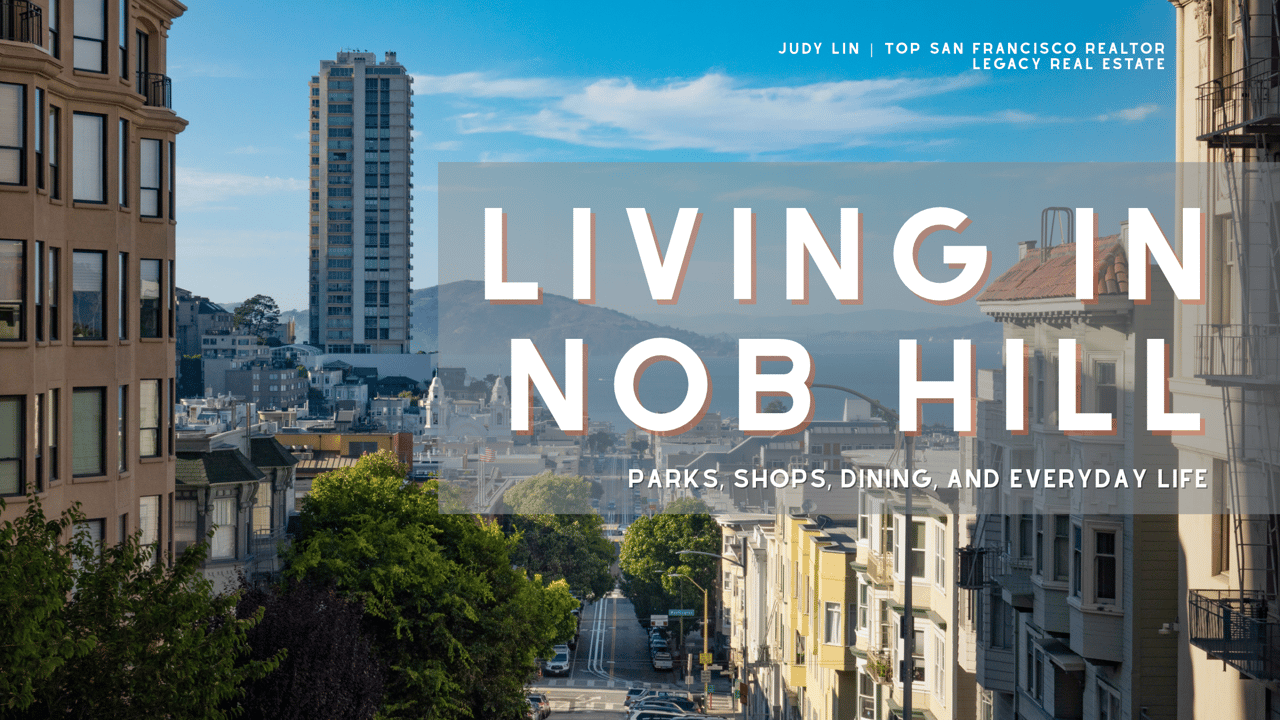
Discover what living in Nob Hill, San Francisco is really like, from charming cafés to iconic cable cars, city views, and beautiful homes in this historic hilltop neig… Read more

October 13, 2026
A thoughtful conversation can help you feel more confident about your home-buying journey.

October 12, 2026
September 2026 Sales Show Where Buyers Are Competing
You’ve got questions and we can’t wait to answer them.