What’s Happening in the San Francisco Housing Market Right Now?
May 21, 2026

May 21, 2026
Quick Take:
Median home sale prices bounced back in a big way in April, as the spring selling season kicked into gear with nearly a 1% year-over-year increase.
Inventory levels continue to climb, with new listings pouring onto the market as sellers look to capitalize on the busier spring months.
Existing home sales are essentially flat on a year-over-year basis, as rising mortgage rates give buyers a reason to pause.
Note: You can find the charts & graphs for the Big Story at the end of the following section.
CLICK HERE TO JUMP TO SAN FRANCISCO HOUSING MARKET ANALYSIS
*National Association of REALTORS® data is released two months behind, so we estimate the most recent month's data when possible and appropriate.
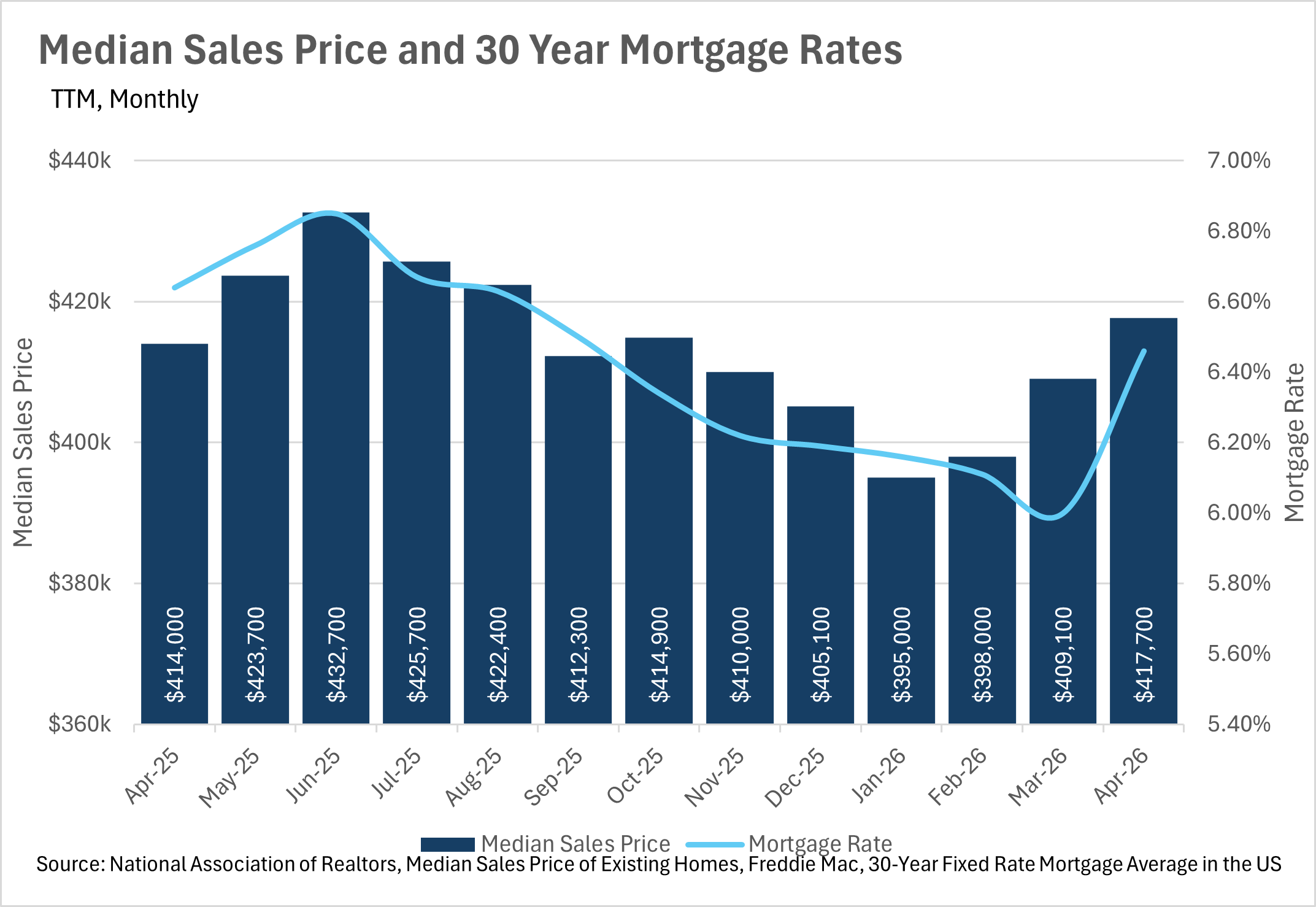
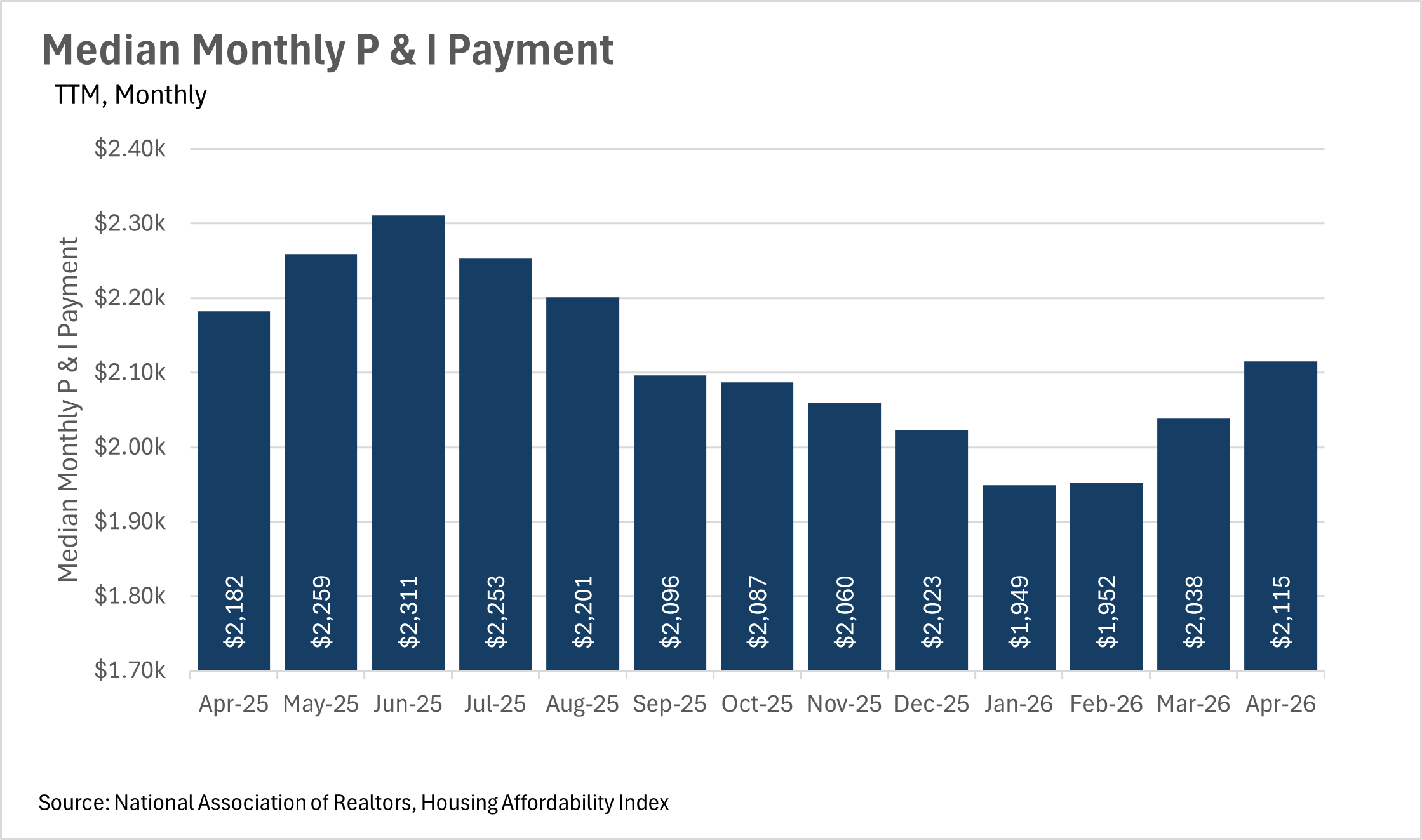
After several months of relatively flat price action, median home sale prices picked up some serious momentum in April. The median home sold for $417,700 in April, representing a 2.10% month-over-month increase and a 0.89% year-over-year gain. This bounce is especially notable when you consider that the median sale price had been on a downward trend from June of last year all the way through January, when it bottomed out at $395,000. Since then, we've seen three consecutive months of month-over-month increases, which tells us that the spring selling season is bringing some renewed energy to the market. However, it's worth noting that mortgage rates have ticked back up in recent weeks, with the average 30-year rate climbing to 6.46% in April, up from the 6.00% low we saw in March. This uptick in rates pushed the median monthly P&I payment up to $2,115, though this is still 3.07% lower than the $2,182 the median homeowner was paying at this time last year. If rates continue to climb, it could put a ceiling on how much further prices can rise in the near term.
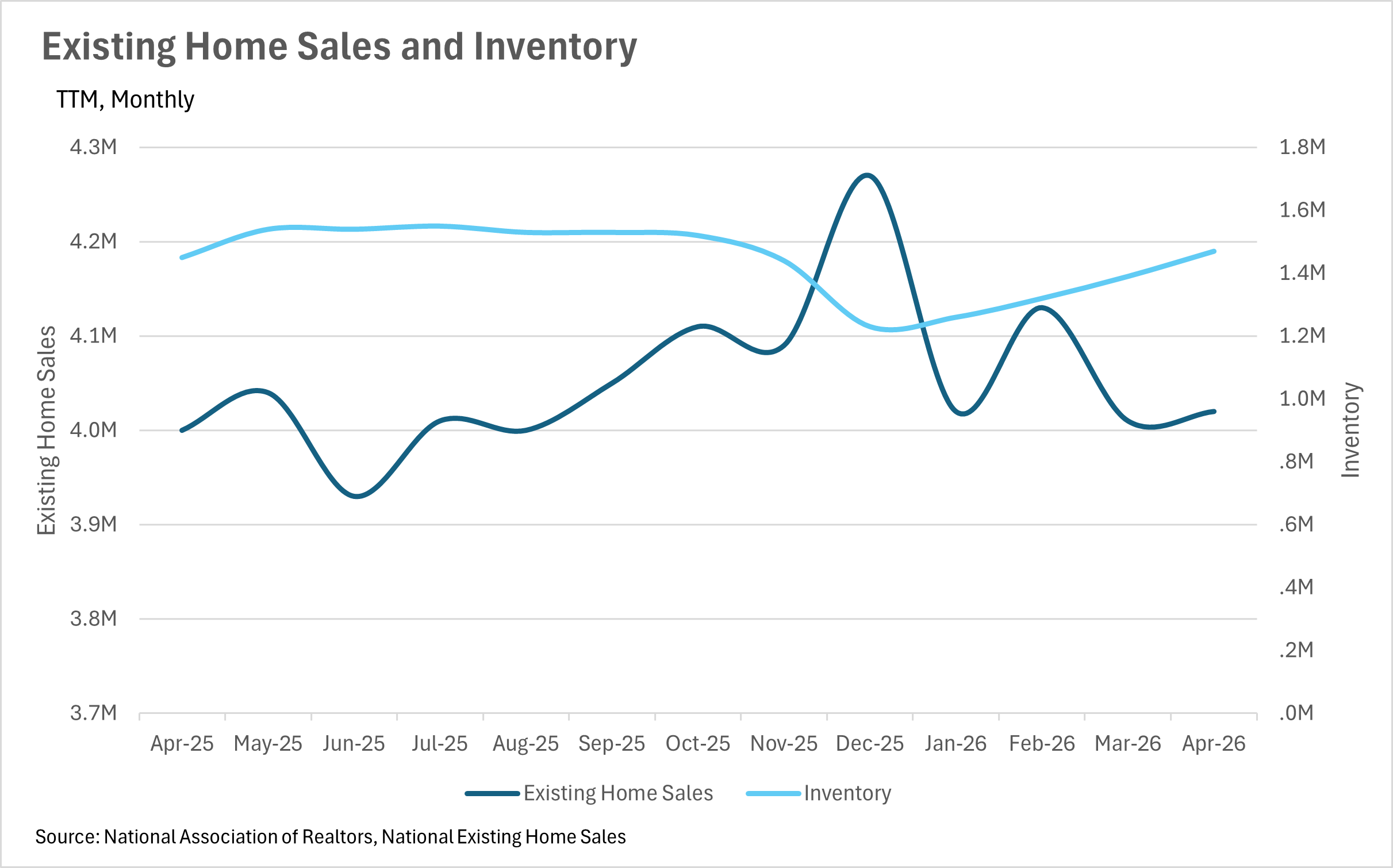
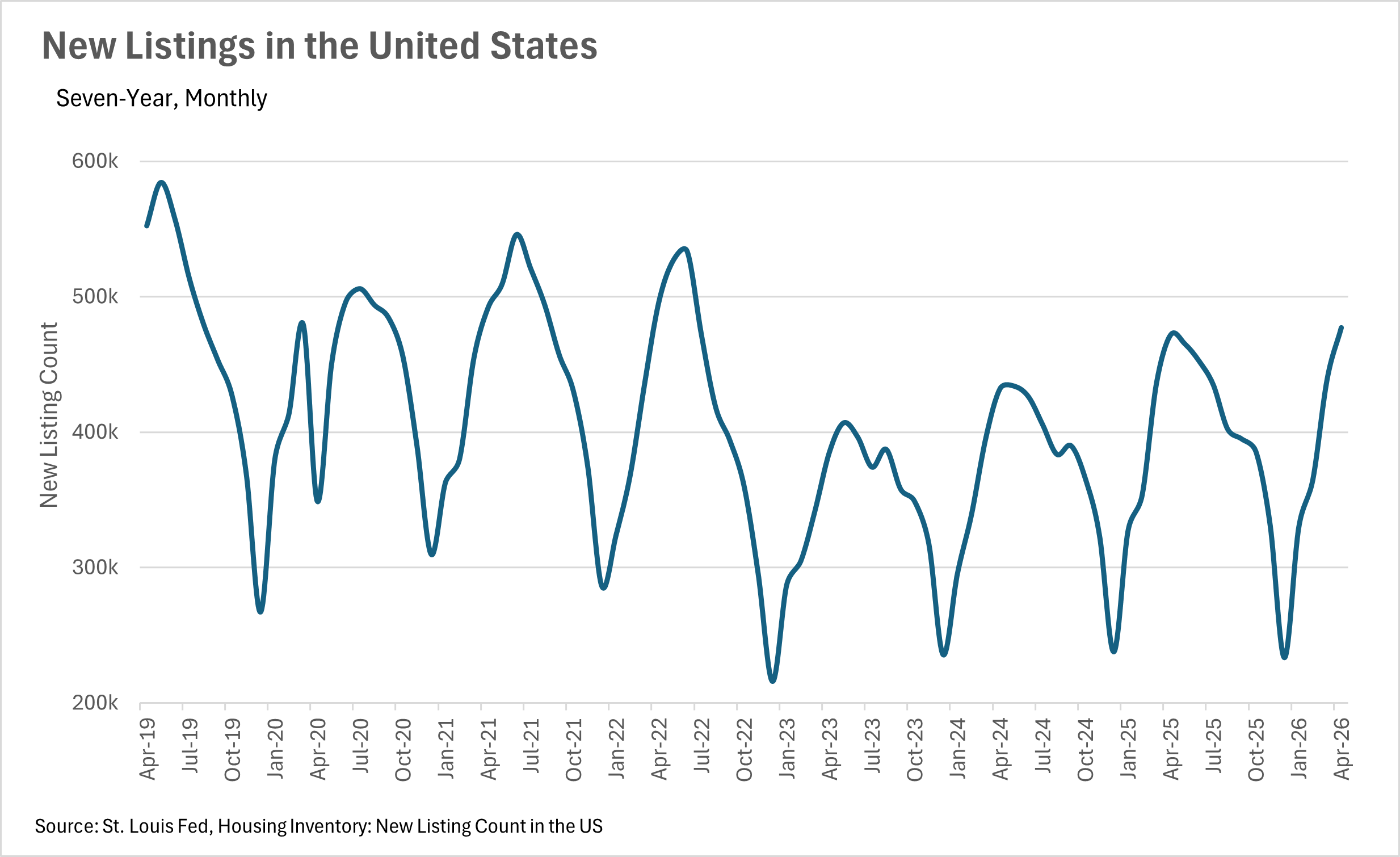
As the spring selling season heats up, we're seeing a significant wave of new listings hit the market. In April, there were 477,116 new listings nationwide, representing an 8.70% month-over-month increase and a 1.13% year-over-year increase. This influx of new listings is great news for buyers who have been dealing with limited options for the better part of the past few years. On the inventory side, there are now 1,470,000 homes available for sale, representing a 5.76% month-over-month increase and a 1.38% year-over-year increase. Inventory has been steadily building since its December low of 1,230,000, and we're now approaching the levels we were seeing during the peak of inventory season last summer. If this trend continues through May and June, buyers could find themselves with the most options they've had in quite some time, which would be a welcome shift in a market that has been starved for supply.
Despite the influx of new inventory and three consecutive months of rising prices, existing home sales have remained relatively flat. In April, 4,020,000 homes changed hands, representing just a 0.50% year-over-year increase and a 0.25% month-over-month uptick. While it's encouraging that sales are at least trending in the right direction, the pace of improvement has been glacial, which suggests that many buyers are still sitting on the sidelines. Part of the story here is the recent uptick in mortgage rates. After falling steadily from 6.85% last June to 6.00% in March, rates have bounced back to 6.46%, which may have given some prospective buyers cold feet. If rates stabilize or begin to decline again, we could see existing home sales pick up in a meaningful way as we move into the summer months. For now, though, it seems like buyers are content to wait and watch.
When determining whether a market is a buyers' market or a sellers' market, we look to the Months of Supply Inventory (MSI) metric. The state of California has historically averaged around three months of MSI, so any area with at or around three months of MSI is considered a balanced market. Any market that has lower than three months of MSI is considered a seller's market, whereas markets with more than three months of MSI are considered buyers' markets.
At the national level, we're seeing the market inch closer to a more balanced state. Inventory continues to build heading into the summer, while existing home sales have been essentially flat, meaning that the available supply is lasting a bit longer than it did at this time last year. However, the recent reversal in mortgage rates adds a layer of uncertainty to the equation. If rates continue to rise, we could see demand soften further, which would push the market toward buyers. On the other hand, if rates settle back down and buyers start to re-engage, the growing inventory could get absorbed quickly, keeping the market tilted in favor of sellers. As always, real estate is a highly localized asset, which is why you should check out what's going on in your local market below in the Local Lowdown!
Quick Take:
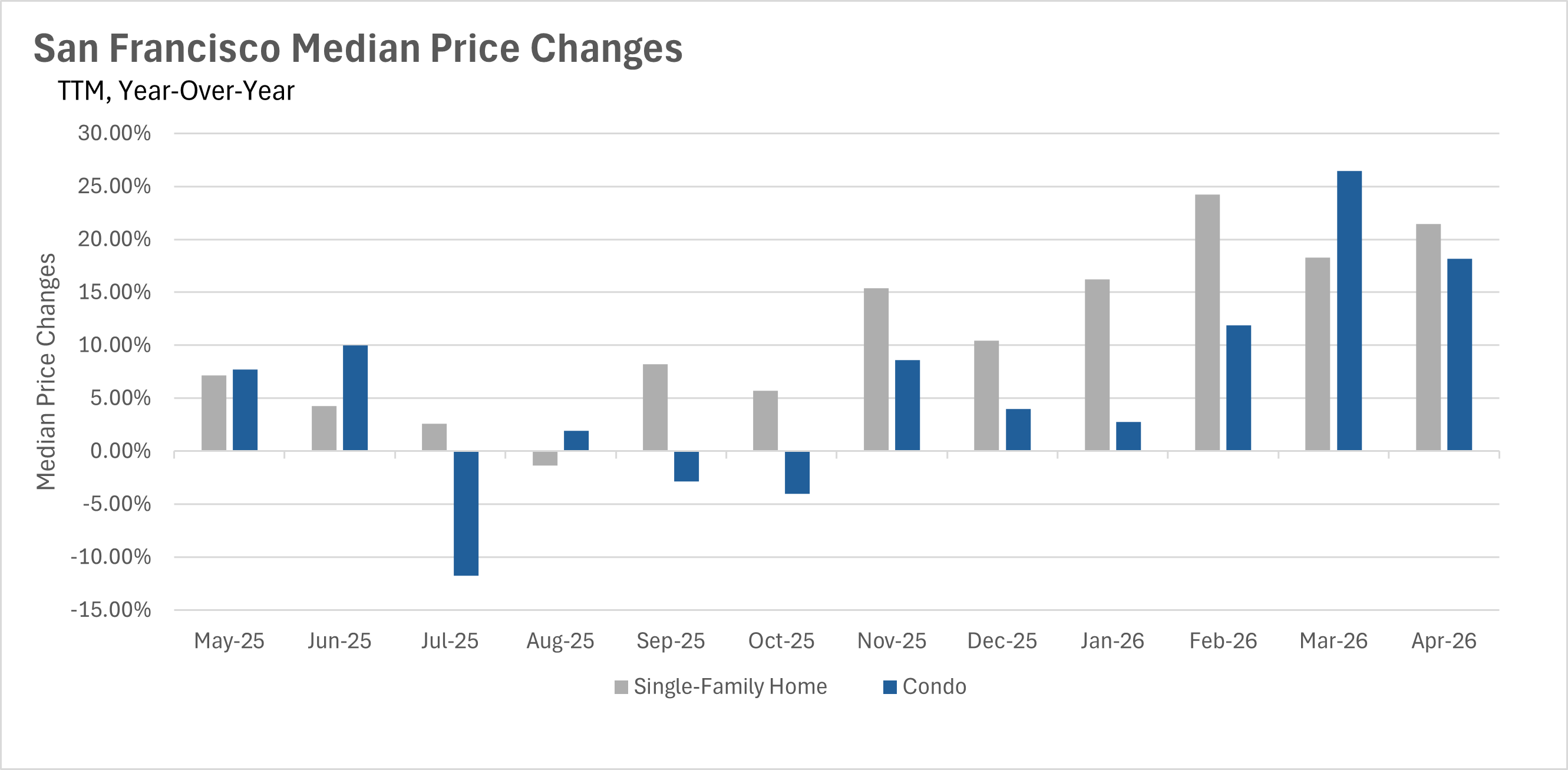
Median sale prices continue their remarkable ascent, with single-family homes up more than 21% and condos up more than 18% year-over-year.
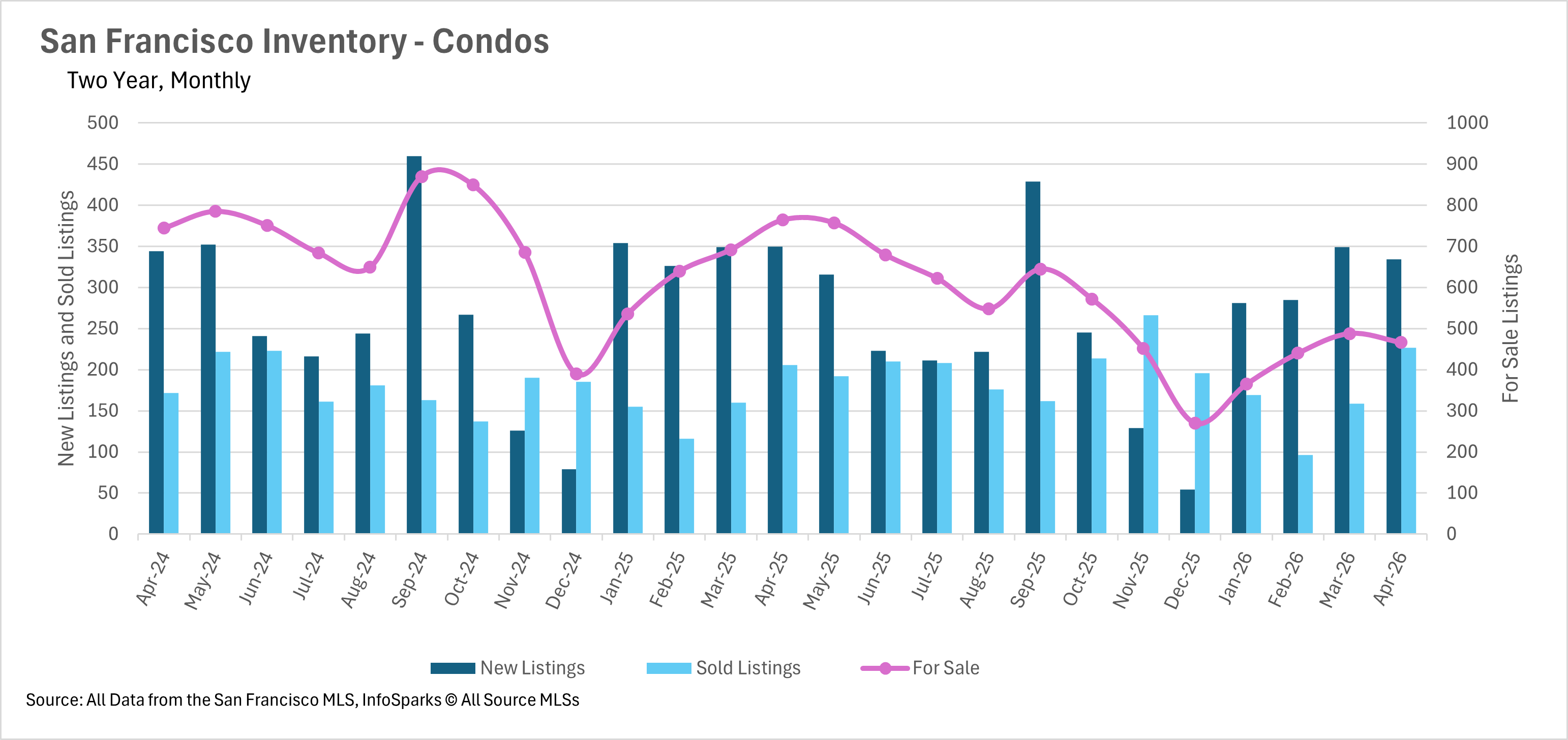
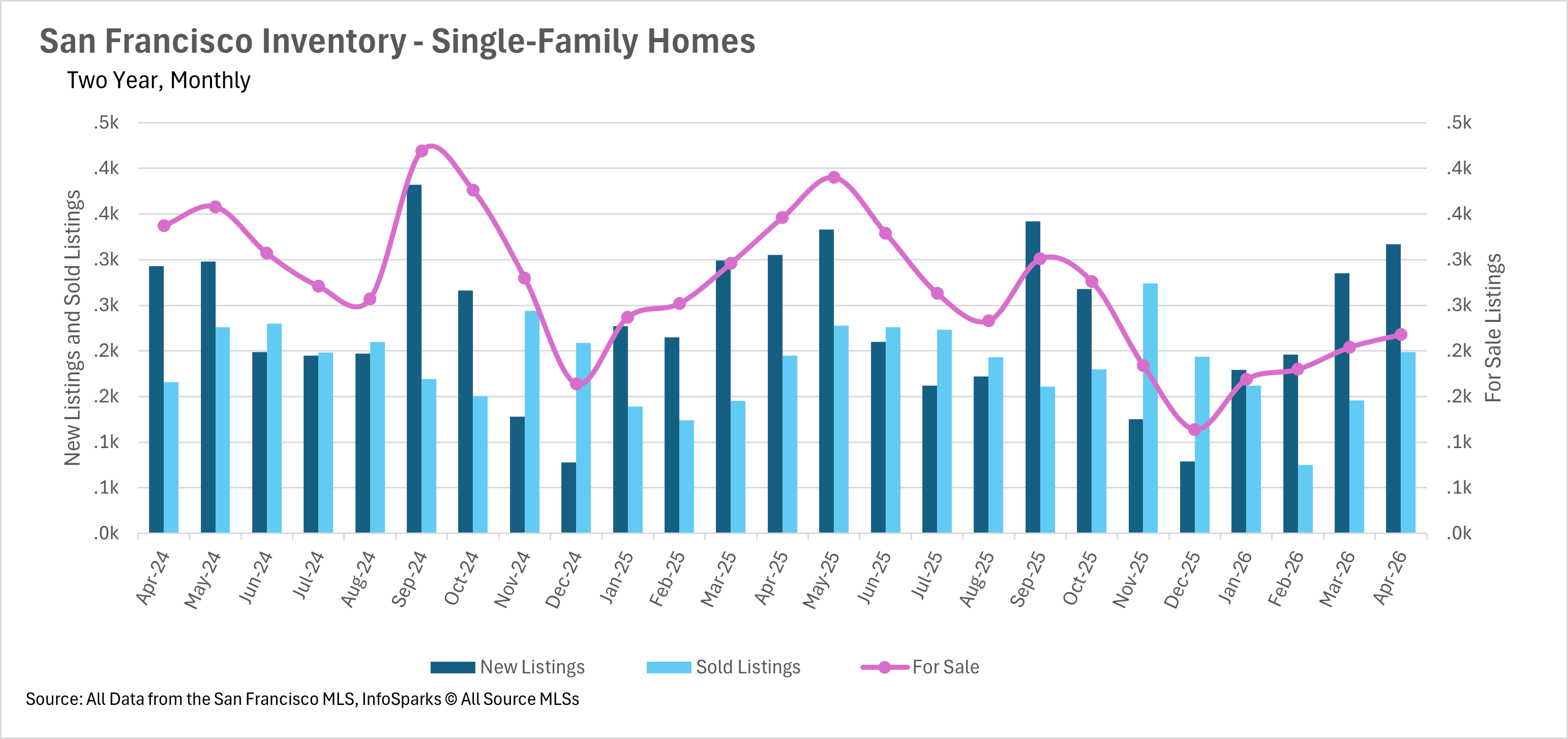
Inventory levels remain nearly 40% below last year, keeping competition fierce throughout San Francisco.
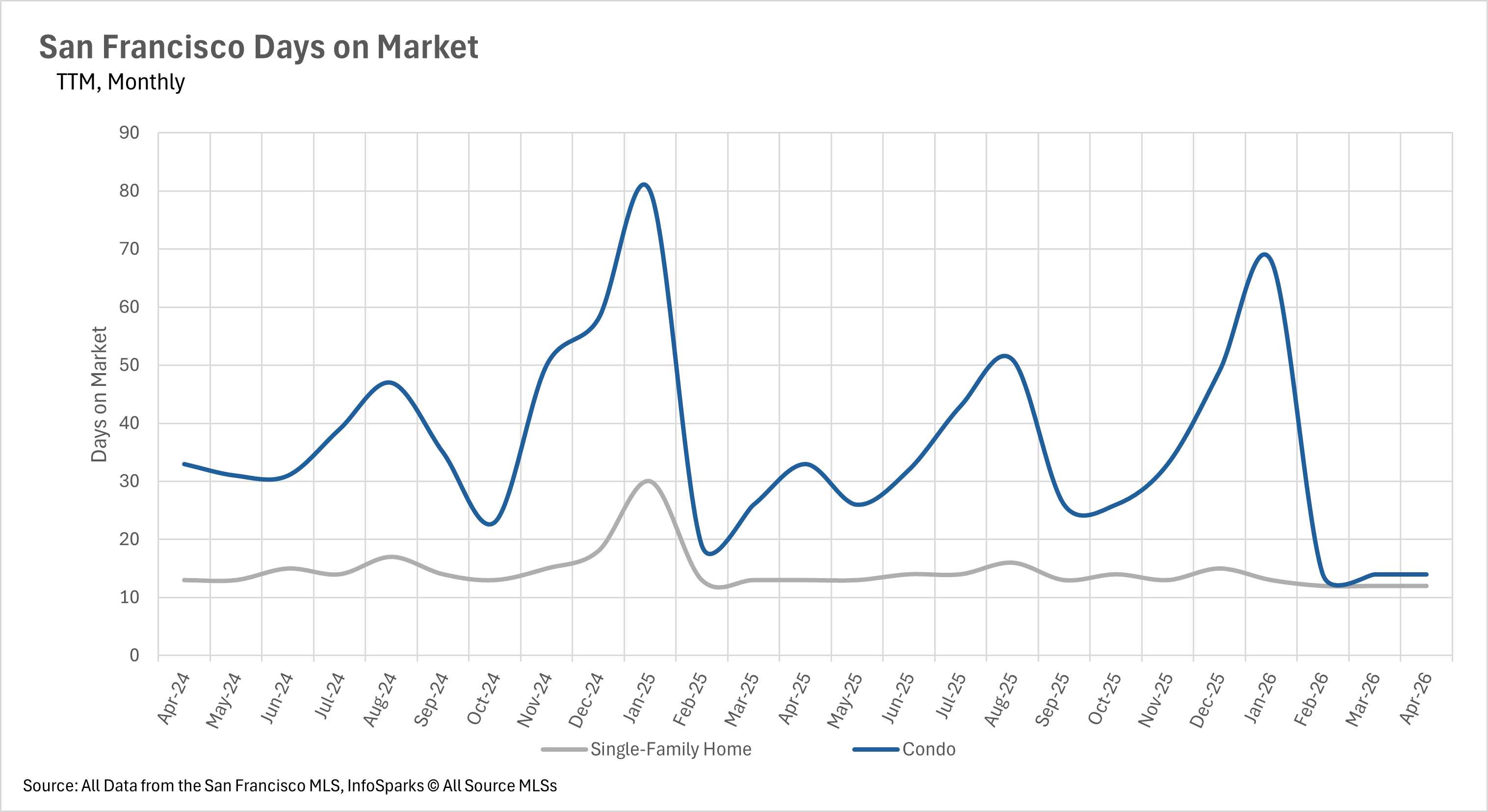
Listings are selling at lightning speed, with single-family homes moving in 12 days and condos in just 14 days.
Note: You can find the charts/graphs for the Local Lowdown at the end of this section.
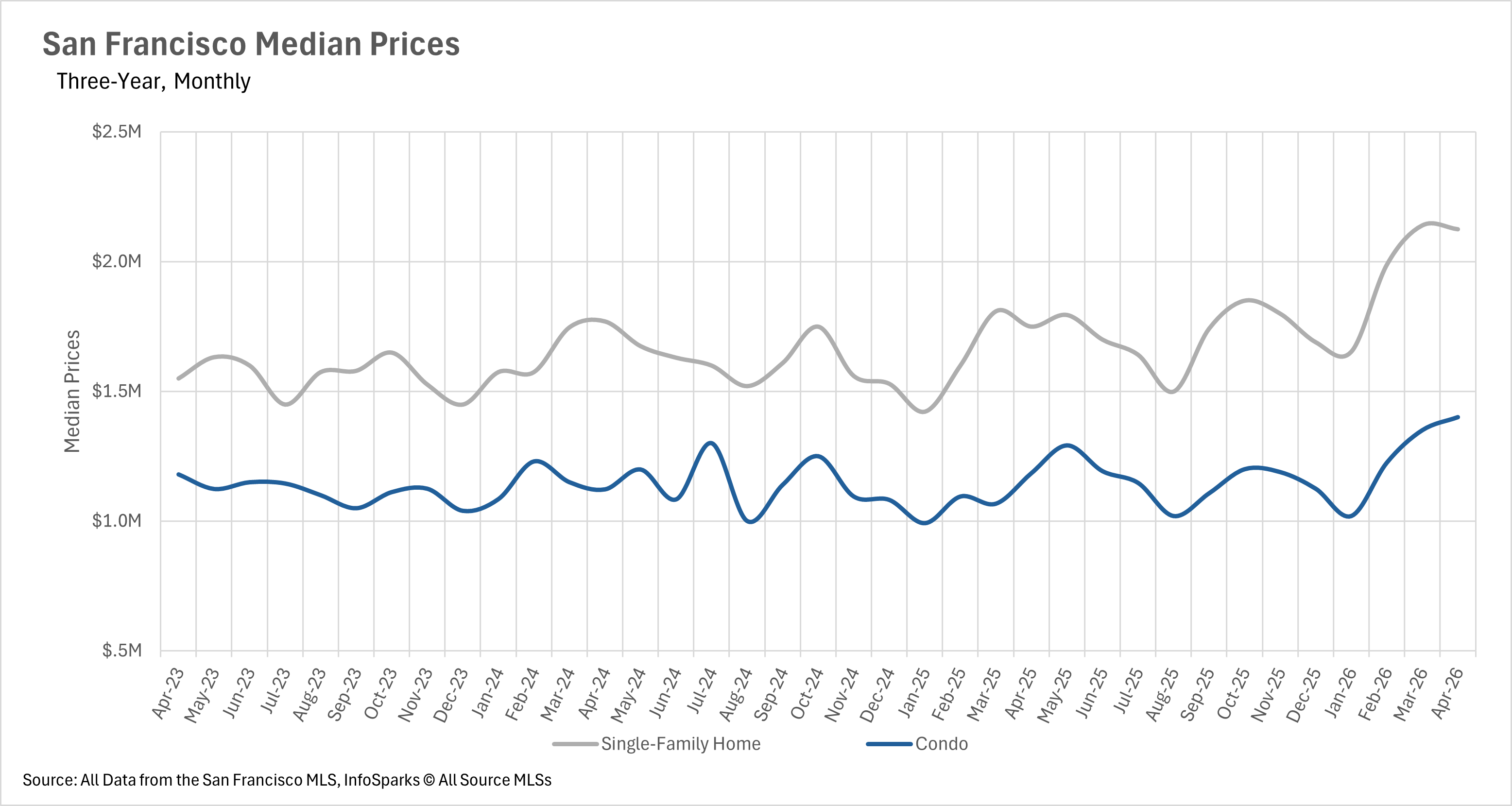
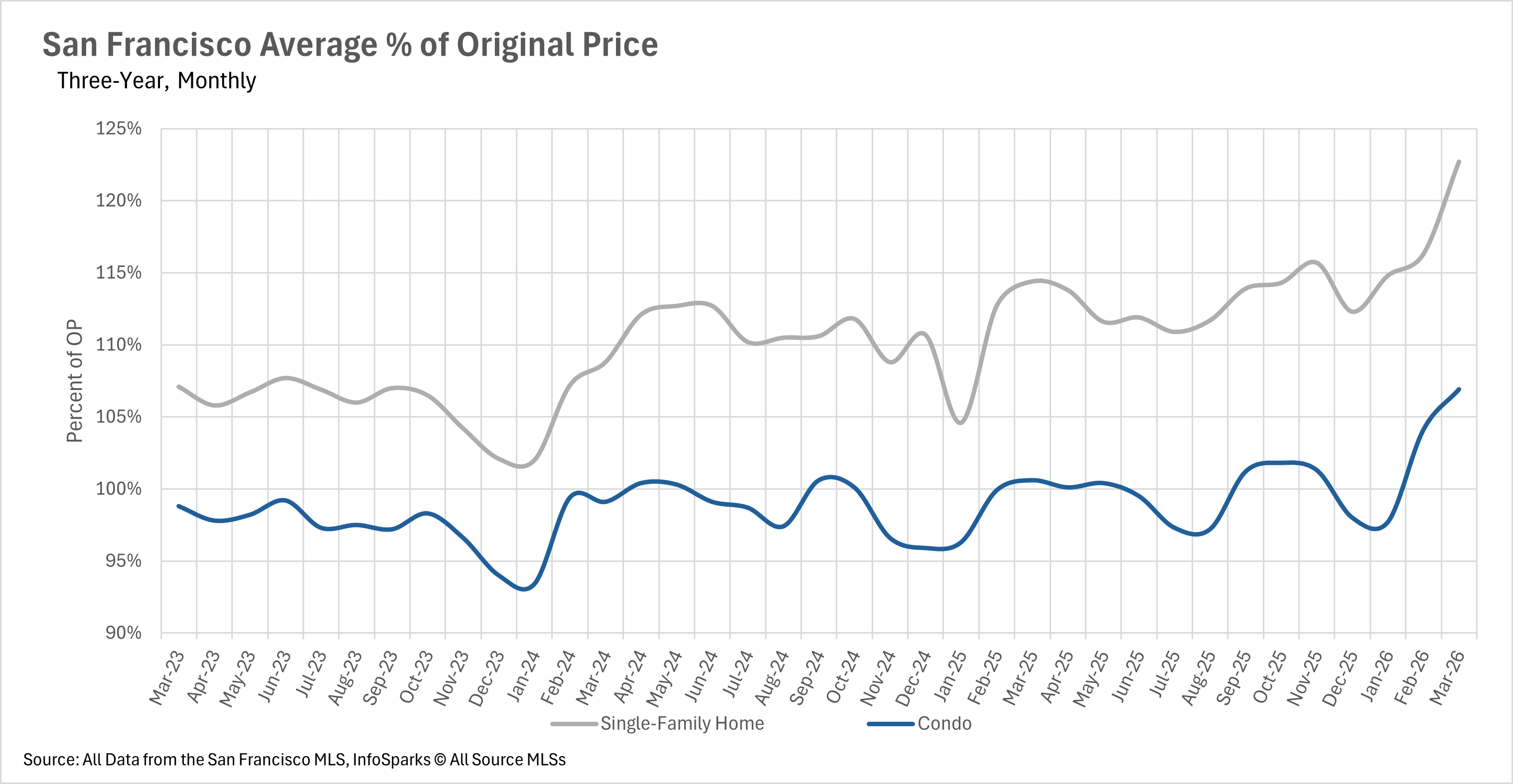
April brought another month of extraordinary price appreciation to San Francisco, with both property types posting double-digit year-over-year gains. Single-family homes saw a 21.43% increase in median sale price, with the median home selling for $2,125,000. The condo market continued its impressive run as well, with an 18.14% surge in median sale price to $1,400,000. Competition for homes remains at a fever pitch, with single-family homes routinely selling for more than 20% over the original asking price. Condos are also commanding substantial premiums, selling for roughly 7% over asking on average.
Even as we move deeper into the heart of the spring selling season, inventory levels remain stubbornly below where they were a year ago. There are currently just 218 single-family homes for sale in San Francisco, representing a 36.99% decline compared to April 2025. The condo market is facing a similar shortage, with inventory down 39.01% year-over-year to 466 units. While new listings increased from March, with 317 new single-family homes and 334 new condos hitting the market, the relentless pace of sales continues to keep overall inventory suppressed. Buyers looking for options will need patience, as the selection remains extremely limited.
The severe inventory shortage has made San Francisco one of the fastest-moving markets in California. The average single-family home is selling in just 12 days, representing a 7.69% decrease compared to last April. The condo market has seen an even more dramatic transformation, with the average condo selling in just 14 days, a remarkable 57.58% year-over-year decline. Last April, the average condo sat on the market for 33 days, meaning today's condos are selling in less than half the time. For buyers, this ultra-fast pace leaves almost no room for deliberation, making preparation and decisiveness essential.
When determining whether a market is a buyers' market or a sellers' market, we look to the Months of Supply Inventory (MSI) metric. The state of California has historically averaged around three months of MSI, so any area with at or around three months of MSI is considered a balanced market. Any market that has lower than three months of MSI is considered a seller's market, whereas markets with more than three months of MSI are considered buyers' markets.
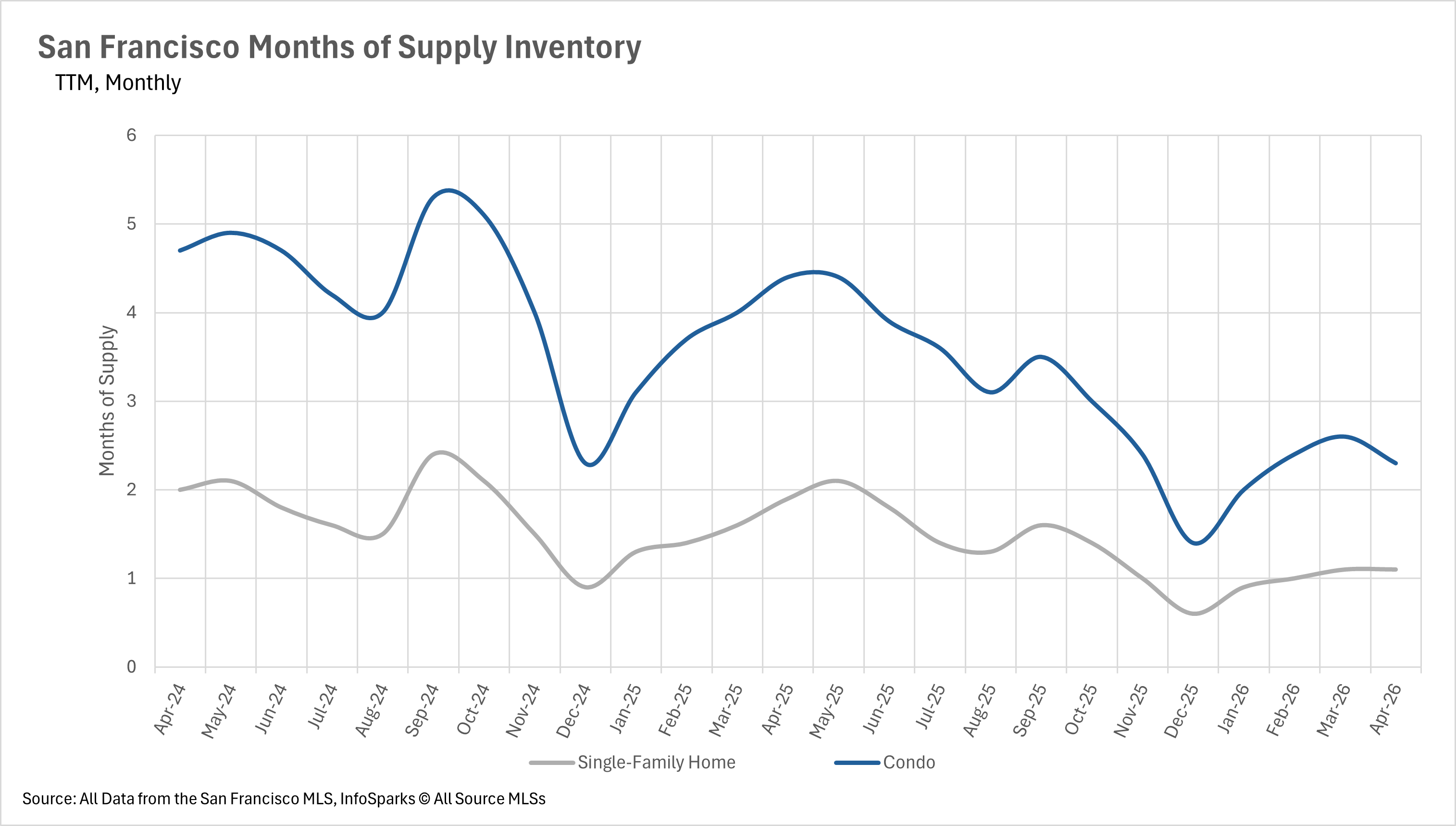
With just 1.1 months of single-family home inventory and 2.3 months of condo inventory on the market, San Francisco remains a deeply entrenched seller's market across all property types. Both figures represent year-over-year declines of more than 40%, highlighting how dramatically conditions have shifted in favor of sellers. Notably, the condo market has transformed from a buyer's market last April (4.4 MSI) to a strong seller's market today. Until significant new inventory enters the market, sellers will continue to enjoy the upper hand in negotiations.
|
Stay up to date on the latest real estate trends.

September 25, 2026
While the national market cools, San Francisco continues to see strong demand, limited inventory, and a competitive market.

September 17, 2026
Understanding the Key Differences Before You Buy in San Francisco

September 3, 2026
Pacifica home sales slowed in August, but well-priced properties continued to move quickly, with 68% of closed homes selling within 30 days.

September 1, 2026
Discover what makes San Francisco’s Inner Sunset so desirable, from Golden Gate Park and Irving Street to transit, tech shuttle access and Ocean Beach.
You’ve got questions and we can’t wait to answer them.