San Francisco Housing Market Update: Local Demand Remains Strong as the National Market Cools
September 25, 2026

September 25, 2026
Across the country, the housing market showed signs of cooling in August. Home prices declined for the second consecutive month, inventory continued to rise, and existing-home sales slowed as mortgage rates moved higher.
San Francisco, however, tells a very different story.
While national buyers generally have more homes to choose from and greater negotiating leverage, San Francisco buyers face limited inventory, fast sales, and continued competition—particularly for well-prepared, well-priced properties.
Here is what buyers and sellers should know as we head into the fall market.
After five consecutive months of gains, the national median home sale price reached $442,800 in June before declining in July and again in August. The August median was $429,100—still slightly higher than a year earlier, but approximately 3% below the June peak.
Several factors contributed to the slowdown:
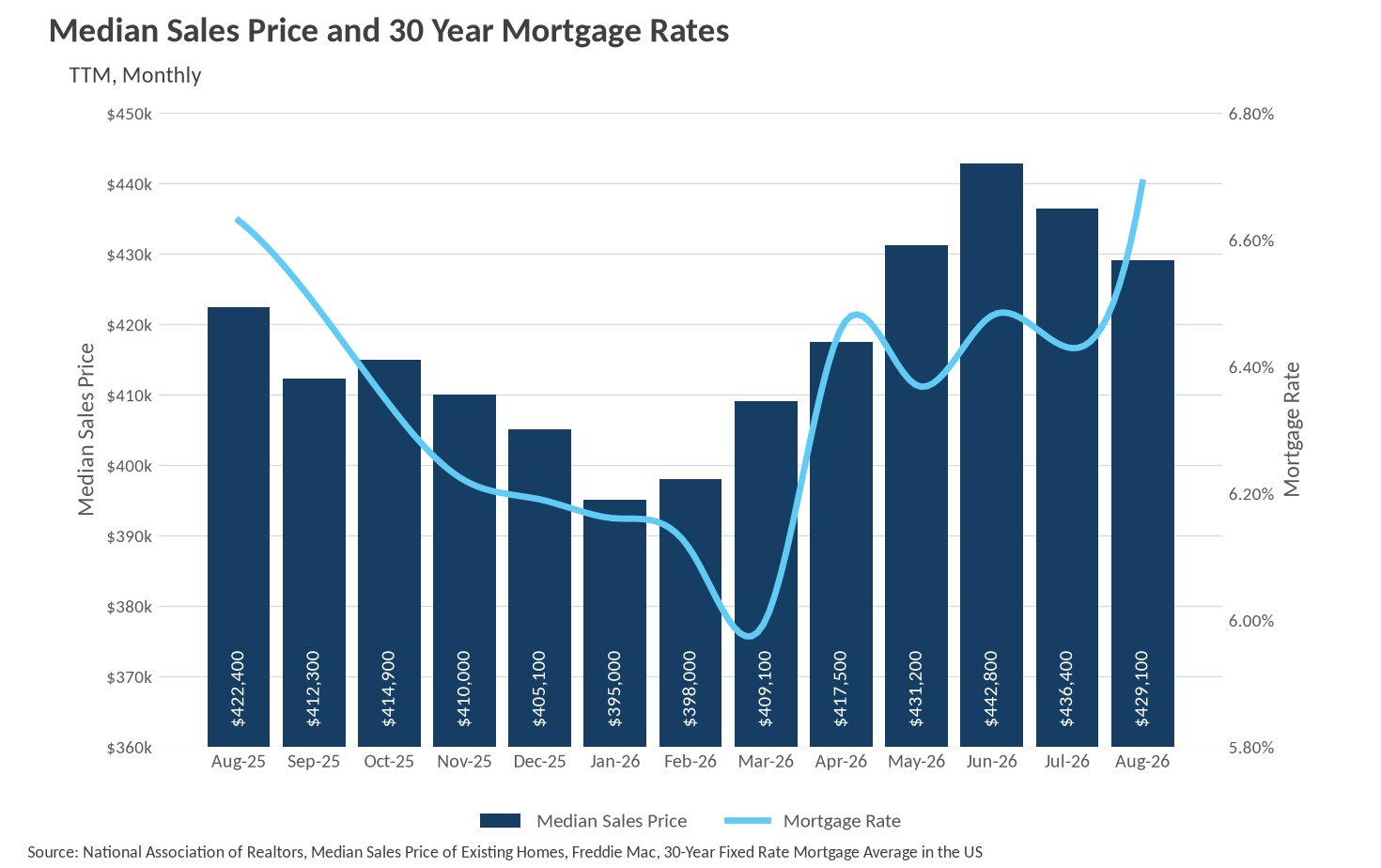
For the latest national housing statistics, visit the National Association of REALTORS® Existing-Home Sales report. Current mortgage-rate information is available through the Freddie Mac Primary Mortgage Market Survey.
The increase in national inventory is one of the most important changes in the current market.
Inventory rose to approximately 1.62 million homes in August, up from 1.23 million in December. At the same time, new listings declined from July and remained roughly the same as the previous year.
That suggests inventory is not increasing because an unusually large number of homeowners are deciding to sell. Instead, homes are generally taking longer to sell, causing available inventory to accumulate.
For buyers in many parts of the country, this may mean:
However, greater leverage does not necessarily mean greater affordability. Higher mortgage rates can significantly affect a buyer’s monthly payment, even when home prices soften.
Real estate is local, and the San Francisco market is behaving very differently from the national market.
In August, San Francisco’s median single-family home price was approximately $1.85 million. Although that represented a seasonal decline from the spring peak, it was more than 23% higher than in August of the previous year.
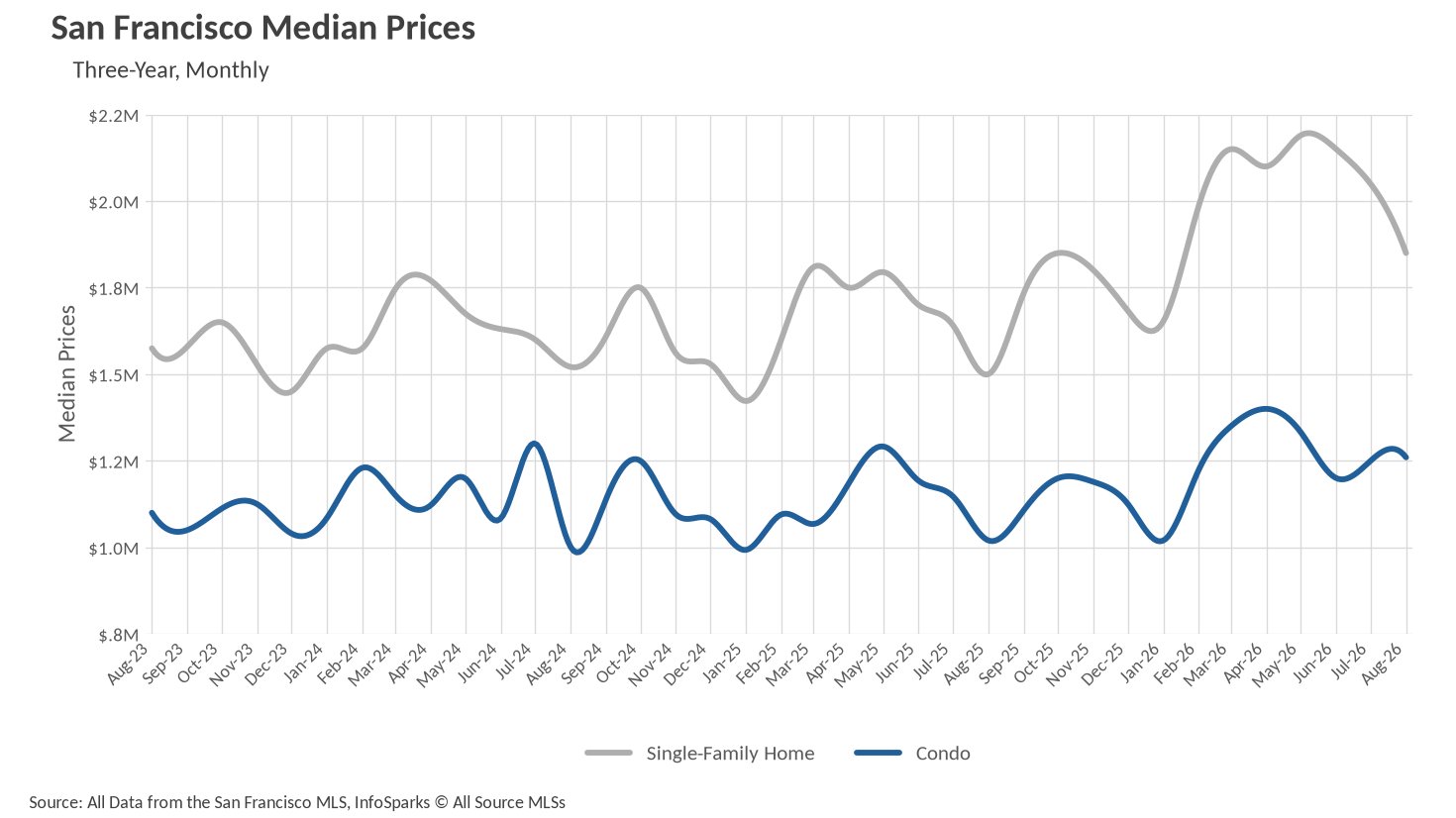
The condominium market also showed renewed strength. The median San Francisco condo price reached approximately $1.26 million, slightly higher than in July and more than 23% higher year over year.
These figures show why national headlines do not always reflect what buyers and sellers experience in individual San Francisco neighborhoods.
A home in Bernal Heights, Noe Valley, the Inner Sunset, Glen Park, Mission Terrace, or the Richmond District may face completely different market conditions from a similar property elsewhere in California—or even in another San Francisco neighborhood.
You can find more local real estate information and neighborhood guidance on the Legacy SF Homes blog.
The clearest difference between the national market and San Francisco is inventory.
At the end of August, San Francisco had approximately:
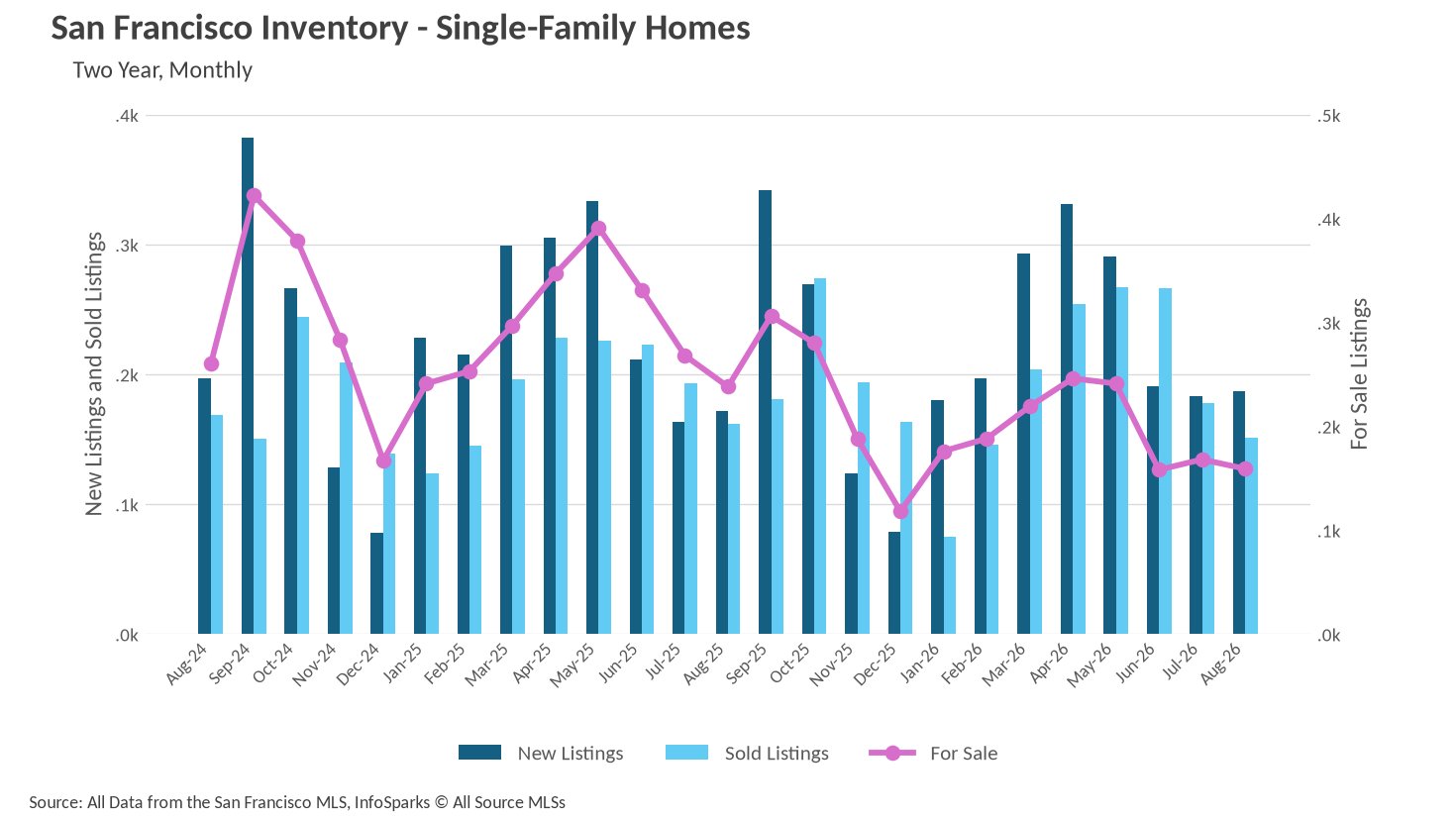
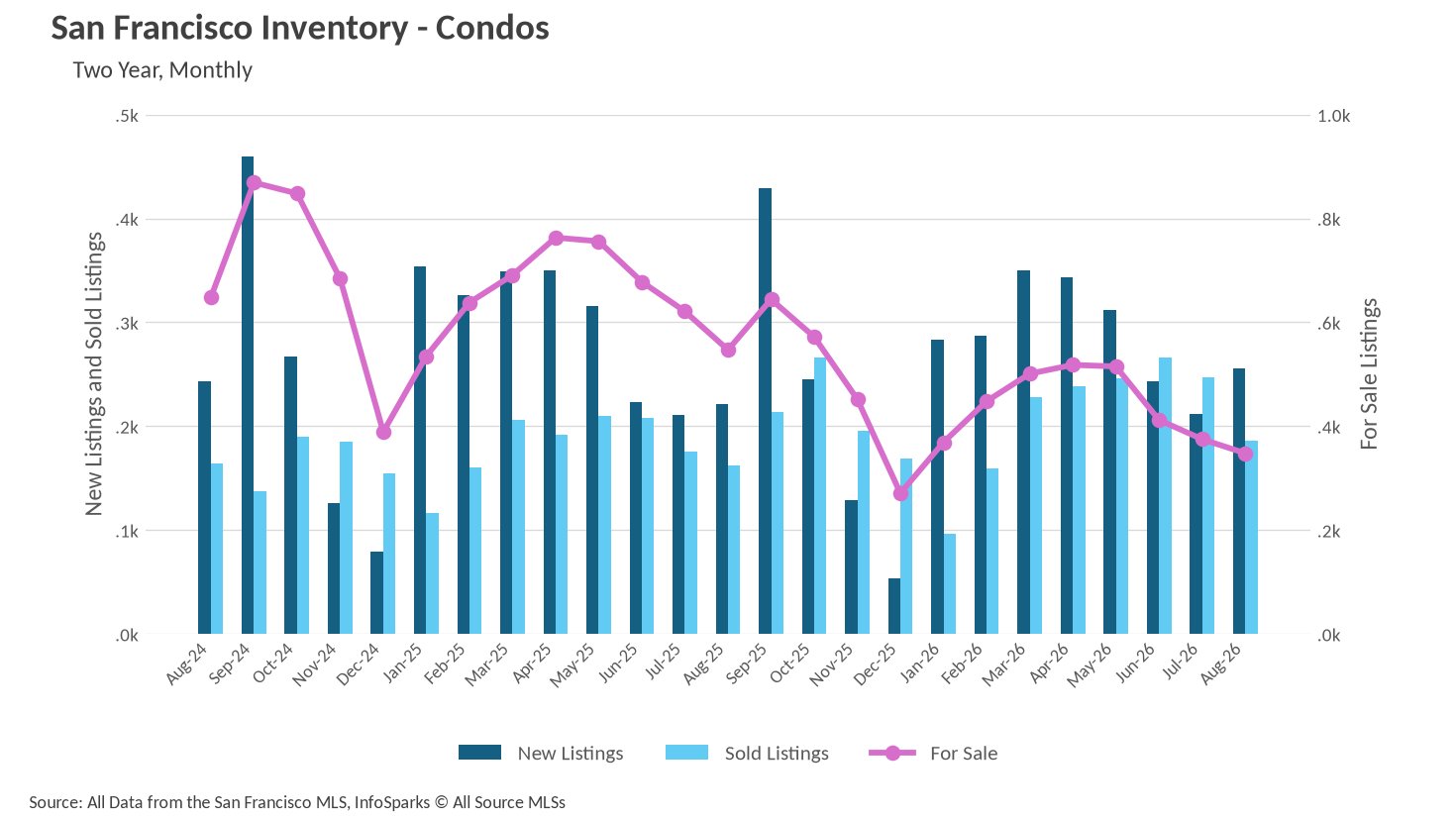
New listings increased compared with the previous August, but buyers absorbed the additional supply quickly. That tells us demand remains strong for desirable homes that are properly prepared, priced, and marketed.
With relatively few properties available, buyers may still find themselves competing when a compelling home comes on the market.
Single-family homes sold in an average of approximately 13 days in August, compared with 16 days during the same month last year.
The condo market saw an even bigger shift. Condominiums sold in an average of approximately 19 days—down from 51 days a year earlier.
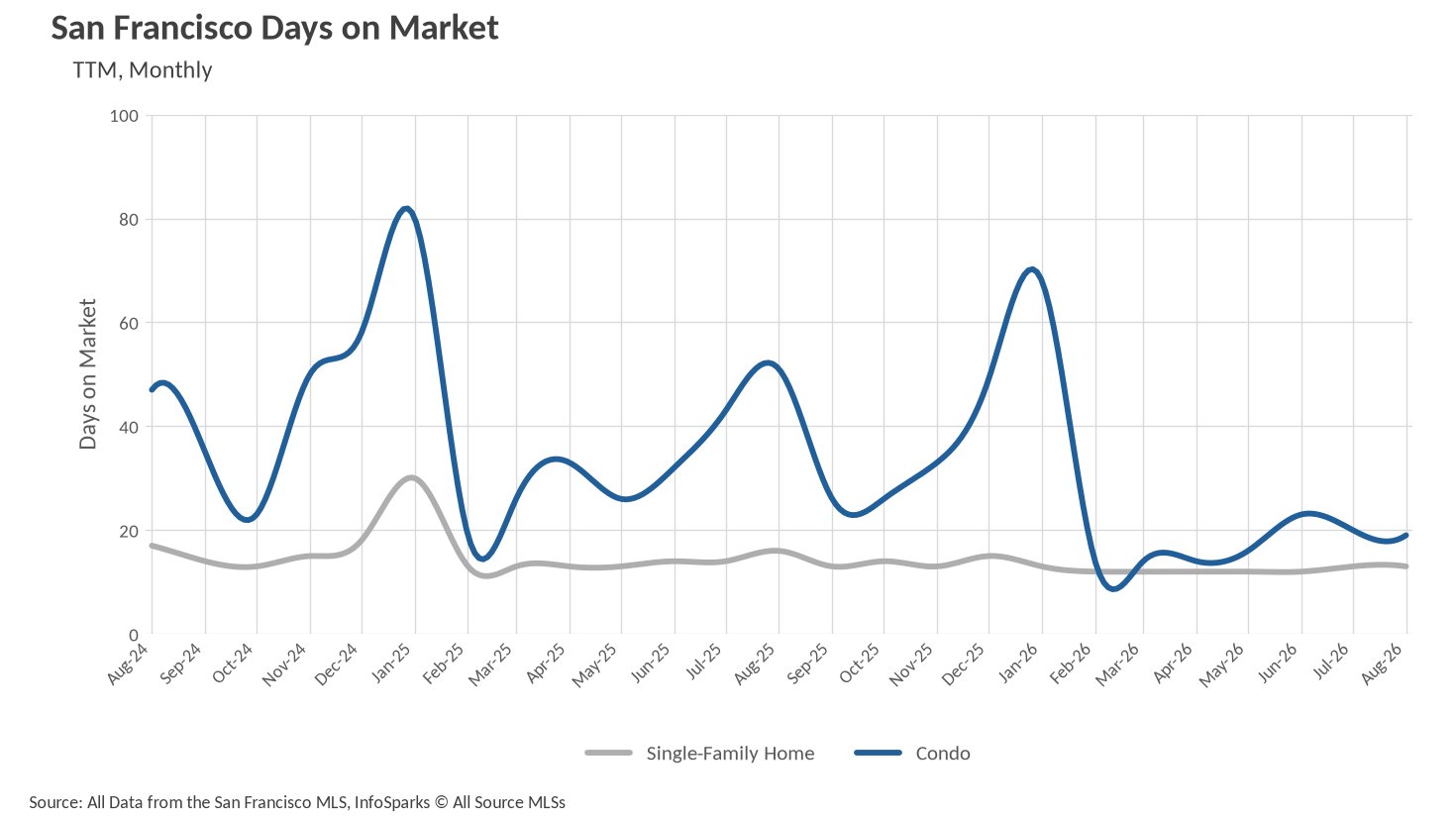
That shift is important. Condos had previously offered buyers more inventory, longer marketing times, and greater negotiating leverage. Although opportunities still exist, the overall condominium market is no longer moving at the much slower pace seen in 2024 and early 2025.
Property condition, location, building finances, insurance, monthly HOA dues, parking, outdoor space, and disclosure issues still strongly affect an individual condo’s value and marketability. Buyers should evaluate the specific property rather than relying solely on citywide statistics.
One way to evaluate market balance is through months of supply inventory, or MSI. This metric estimates how long it would take to sell the available inventory at the current sales pace.
In August, San Francisco had approximately:
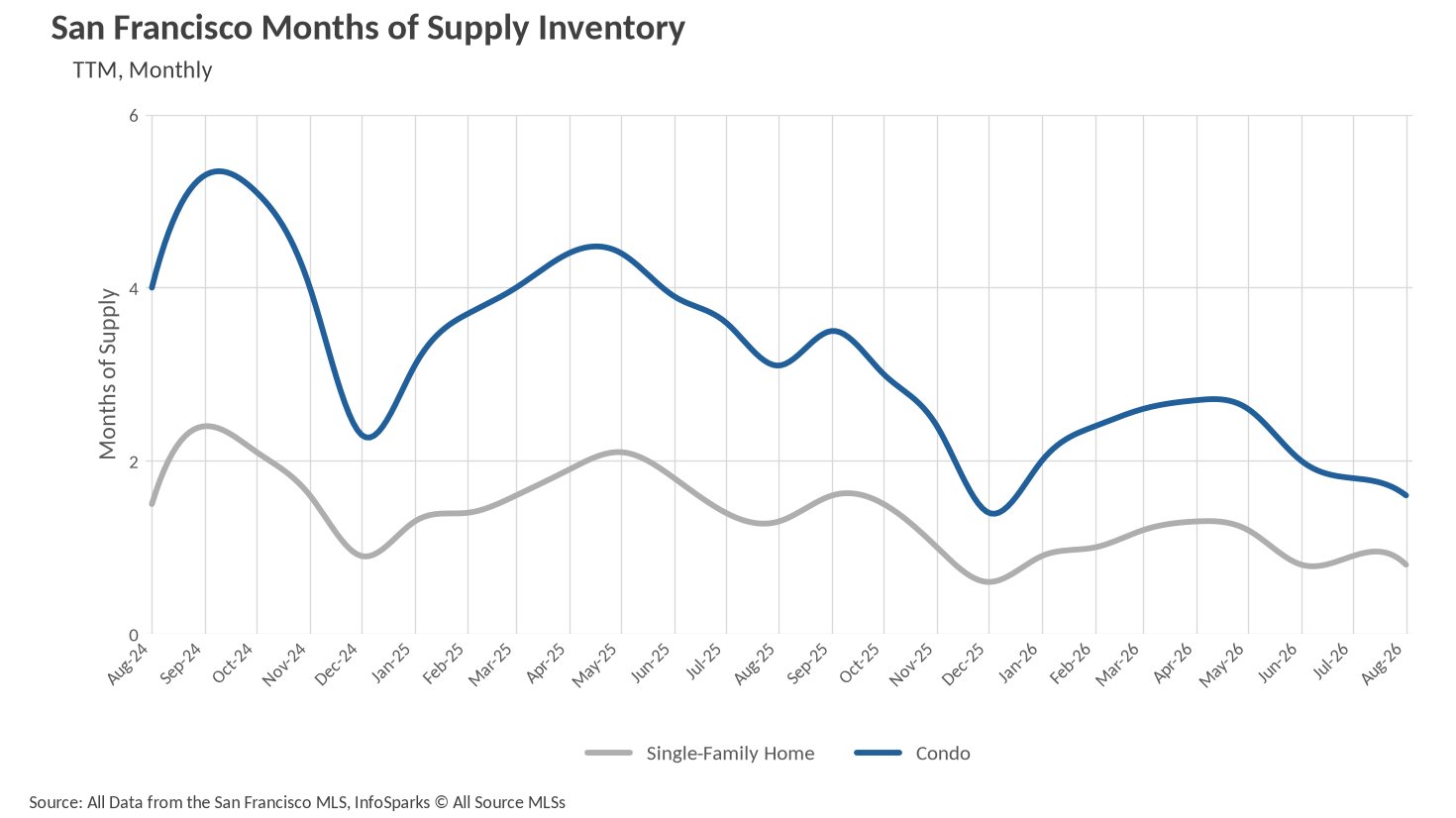
Those numbers indicate a seller-favored market overall, especially for single-family homes. At the current pace, the available single-family inventory would represent only a few weeks of supply.
That does not mean every property will sell quickly or receive multiple offers. Buyers remain sensitive to price, condition, disclosures, insurance concerns, and anticipated repair costs. Overpriced or poorly presented homes can still sit on the market.
The strongest results generally occur when sellers combine thoughtful preparation, strategic pricing, comprehensive marketing, and careful timing.
Sellers continue to benefit from limited competition, but today’s buyers are informed and selective. Simply listing a property is not enough.
Before listing, sellers should consider:
At Legacy Real Estate, we believe preparation begins well before a home appears online. Our full-service approach helps sellers make informed decisions, showcase what makes their home special, and launch with a coordinated marketing strategy.
Learn more about Legacy SF Homes and our San Francisco real estate services.
Buyers should be prepared to move quickly, but they should not skip careful analysis.
Before making an offer, buyers should understand:
A fast-moving market does not mean every home is worth pursuing at any price. The goal is to distinguish between normal property issues, manageable future expenses, and concerns that could materially affect the home's value or enjoyment.
The national housing market is becoming more favorable to buyers as inventory rises and sales slow. San Francisco, however, continues to operate under its own set of conditions.
Limited inventory, short marketing times, strong year-over-year prices, and renewed condo demand all point to a market that continues to favor sellers. At the same time, buyers remain highly attentive to value, condition, financing costs, and property-specific risks.
Whether you are considering buying or selling, citywide statistics are only a starting point. The most useful analysis considers the neighborhood, property type, condition, price range, and current competition.
Carren Shagley and Jennifer Burden of Legacy Real Estate help San Francisco buyers and sellers understand both the numbers and the individual circumstances behind them. If you are considering a move, visit Legacy SF Homes to start a conversation.
San Francisco remains a seller-favored market overall because inventory is limited relative to the current sales pace. In August, single-family homes had approximately 0.8 months of inventory, while condominiums had approximately 1.6 months.
Prices declined from their spring peak, which is common during the late-summer market. However, August median prices for both single-family homes and condos remained substantially higher than they were a year earlier.
Yes. Condo inventory declined considerably from the previous year, and the average marketing time fell from approximately 51 days to 19 days. Individual condo performance still depends heavily on location, condition, HOA finances, insurance, parking, outdoor space, and monthly dues.
Many well-positioned single-family homes continue to sell above their original list prices. However, the amount over asking is not necessarily the same as appreciation because San Francisco agents sometimes use intentionally low list prices to encourage competition.
That depends on the buyer’s finances, housing needs, time horizon, and the specific property. Lower rates could improve affordability, but they could also bring more buyers into the market. Buyers should evaluate what is manageable now rather than relying on an uncertain future rate change.
Fall can be a strong selling period, particularly when inventory is limited. Success depends on the property, neighborhood, preparation, pricing, presentation, and timing. A property-specific market analysis is more useful than a general seasonal rule.
Preparation may include inspections, repairs, painting, staging, landscaping, photography, video, disclosure organization, and a coordinated launch plan. The right improvements depend on the home and should be evaluated before you commit money.
Carren Shagley and Jennifer Burden provide full-service guidance for San Francisco buyers and sellers, including property preparation, pricing, marketing, disclosure review, offer strategy, negotiations, and transaction management. Visit Legacy SF Homes to learn more.
Market statistics are based on the August 2026 data provided for this report. Real estate conditions can vary significantly by neighborhood, property type, price range, and property condition.
Stay up to date on the latest real estate trends.
September 25, 2026
While the national market cools, San Francisco continues to see strong demand, limited inventory, and a competitive market.

September 17, 2026
Understanding the Key Differences Before You Buy in San Francisco

September 3, 2026
Pacifica home sales slowed in August, but well-priced properties continued to move quickly, with 68% of closed homes selling within 30 days.

September 1, 2026
Discover what makes San Francisco’s Inner Sunset so desirable, from Golden Gate Park and Irving Street to transit, tech shuttle access and Ocean Beach.
You’ve got questions and we can’t wait to answer them.