San Francisco Real Estate Market Update: Low Inventory Fuels Strong Start to 2026
March 25, 2026

March 25, 2026
Note: You can find the charts and graphs for the Local Lowdown at the end of this section.
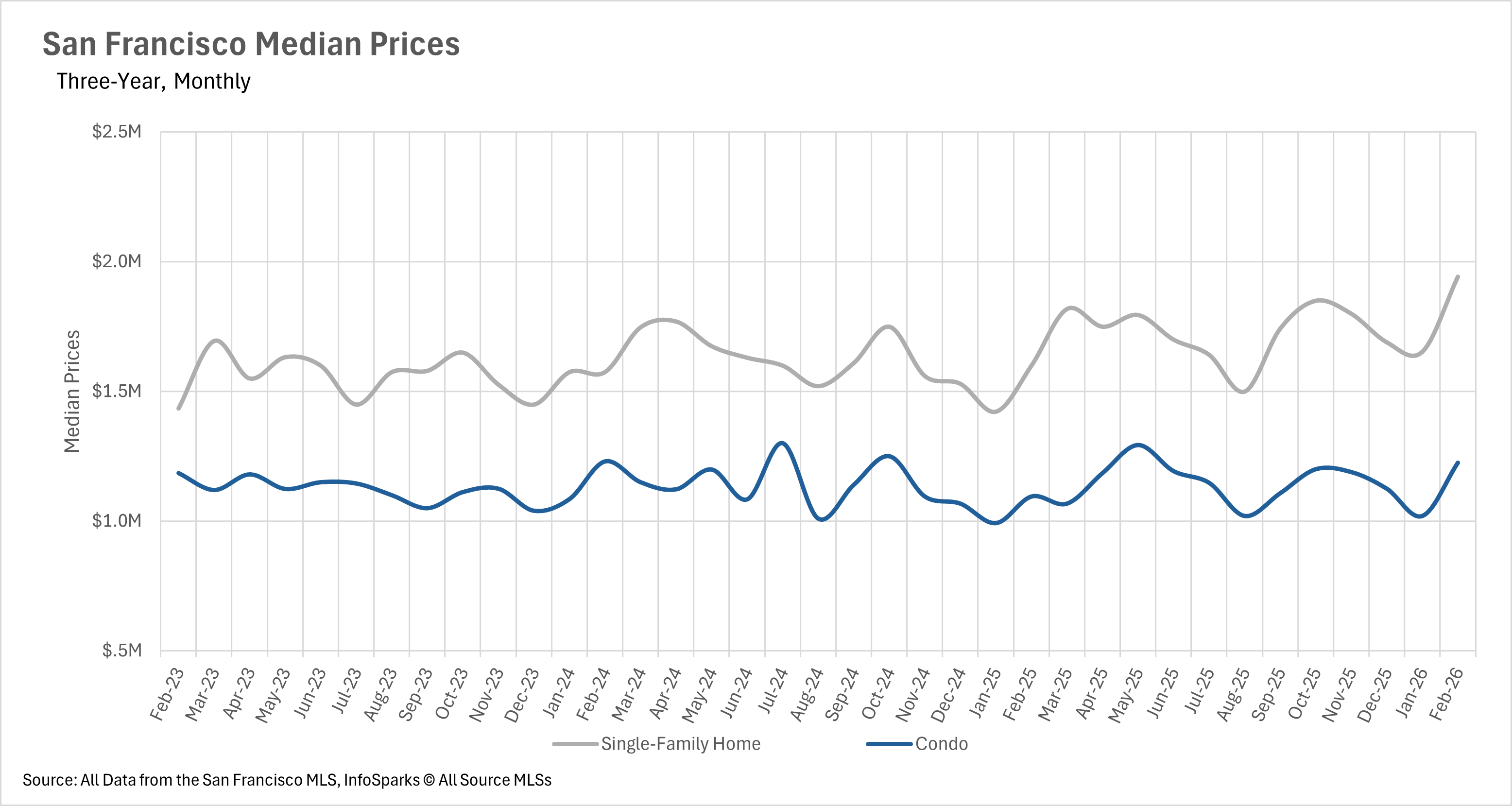
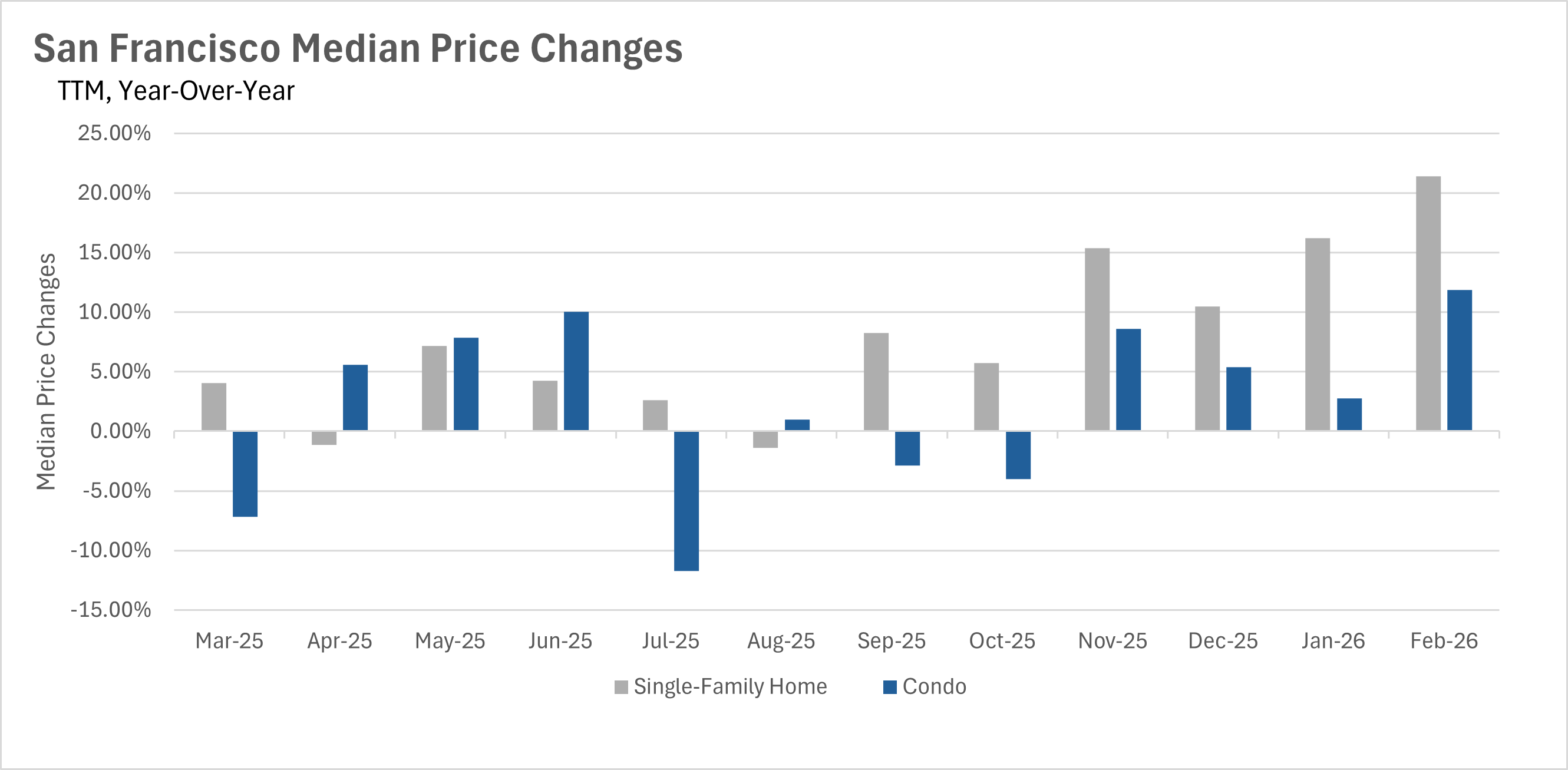
February brought extraordinary price appreciation to San Francisco, with both single-family homes and condos posting impressive year-over-year gains. Single-family homes saw a remarkable 21.41% increase in median sale price, with the median home selling for $1,942,500. Condos also had an exceptional month, with the median sale price climbing 11.87% to $1,225,000.
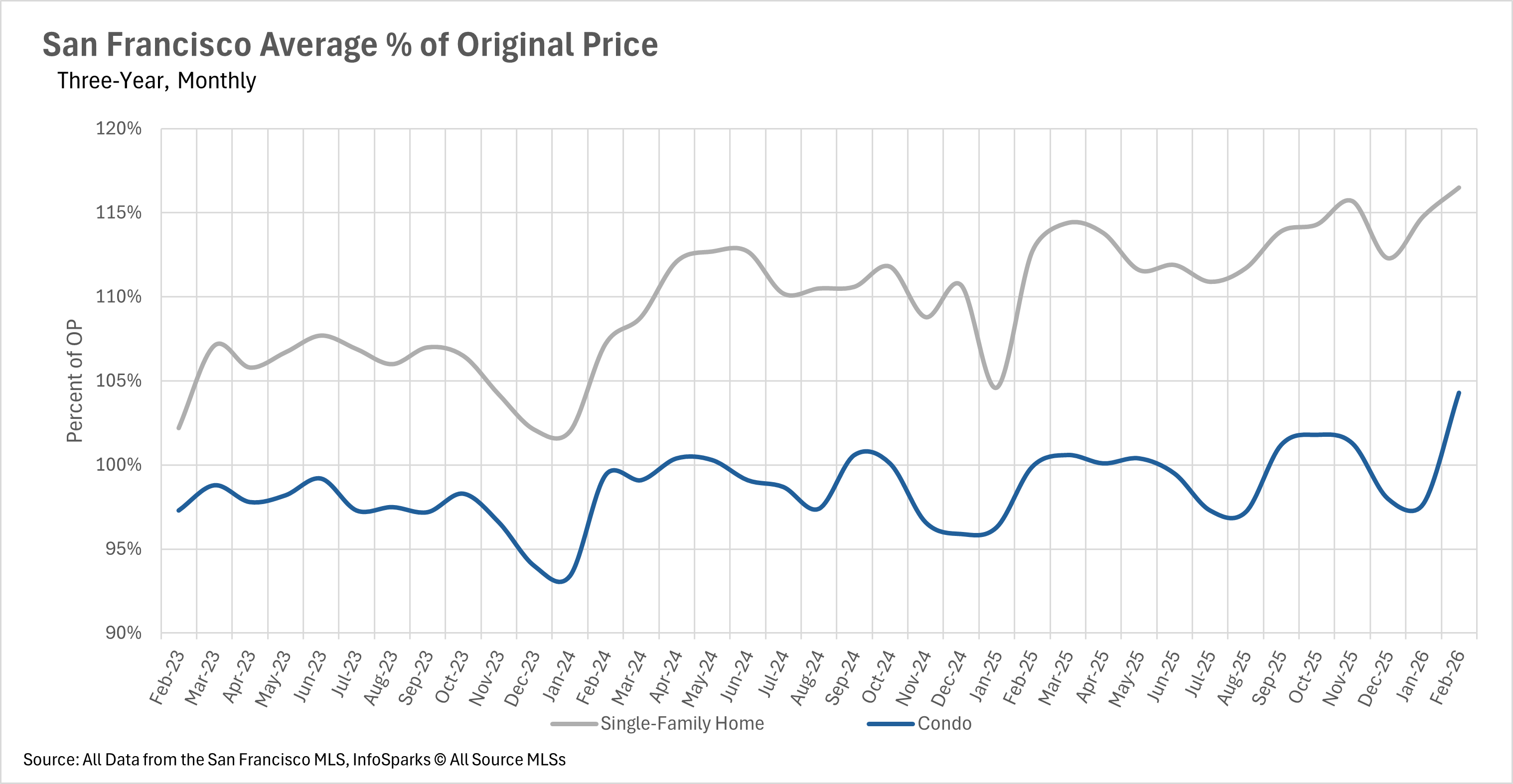
The competition for homes has reached a fever pitch, with single-family homes selling for 16.5% over the original asking price on average, and condos selling for 4.3% over asking. This marks one of the strongest months for condo premiums in recent memory.
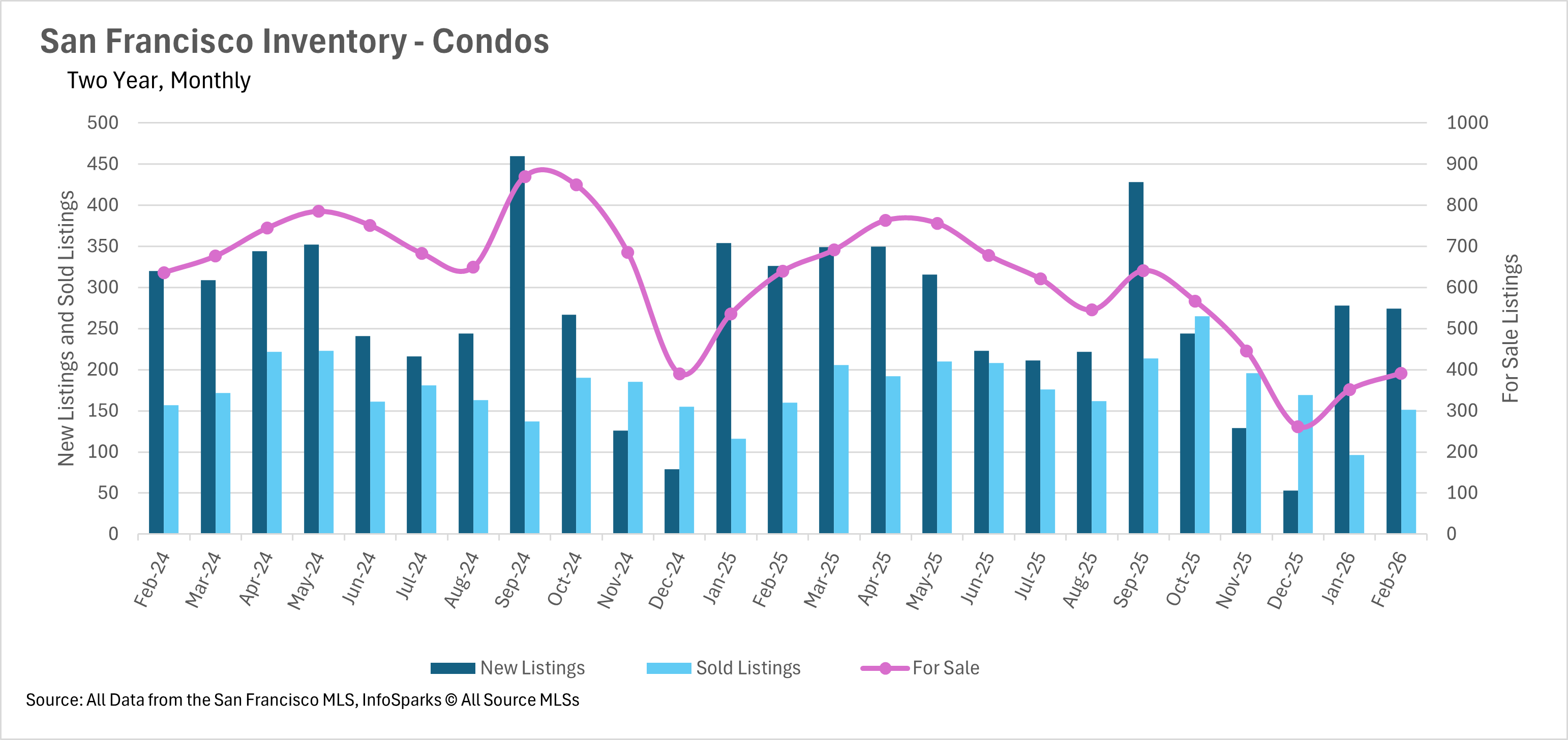
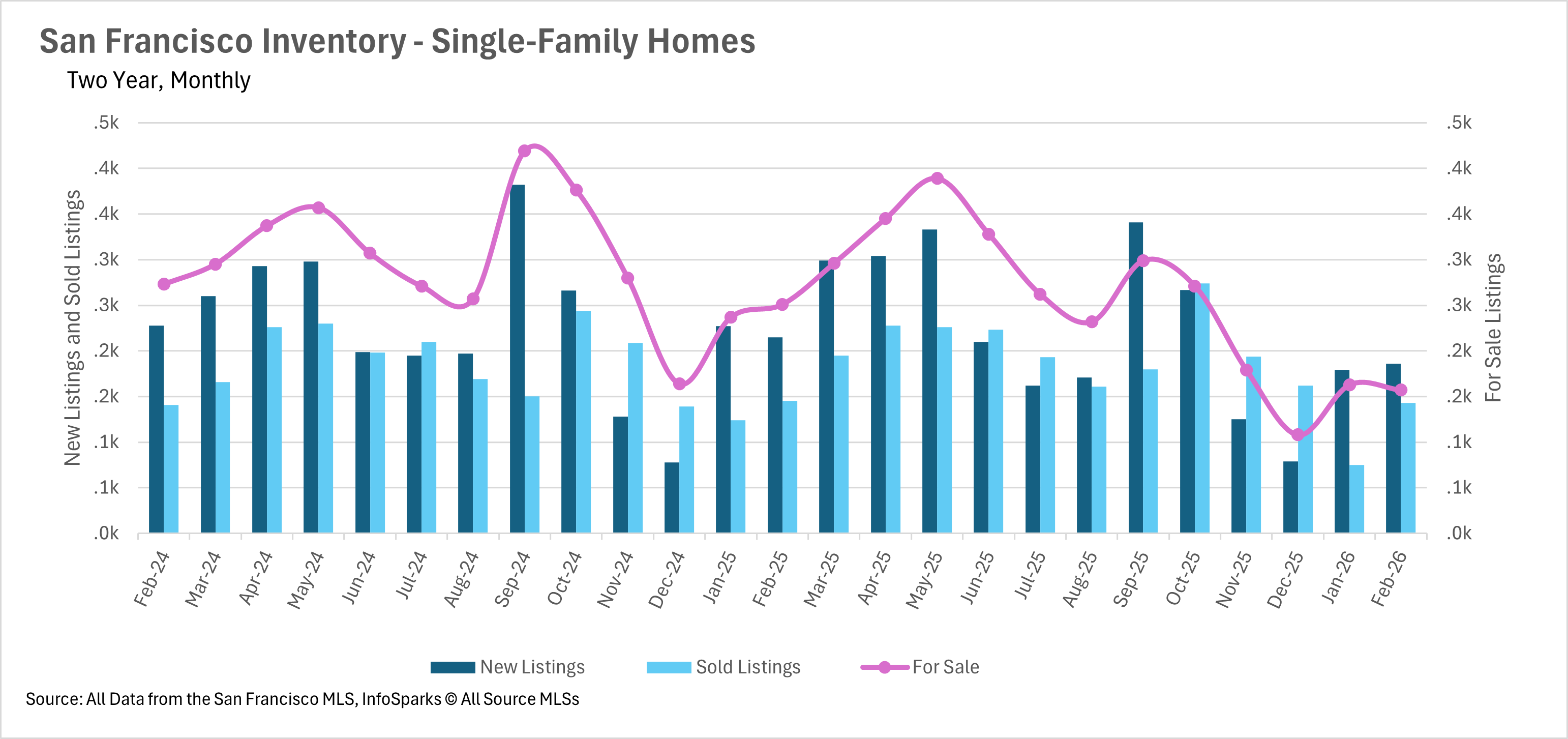
Despite the typical spring uptick in new listings, inventory levels remain drastically below where they were a year ago. There are currently just 157 single-family homes for sale in San Francisco, representing a 37.45% decline compared to February 2025.
The condo market is experiencing a similar shortage, with inventory down 38.81% year-over-year to just 391 units. Combined, there are fewer than 550 homes available for sale in the entire city. Until more homeowners decide to list their properties, this severe supply crunch will continue to fuel intense competition among buyers.
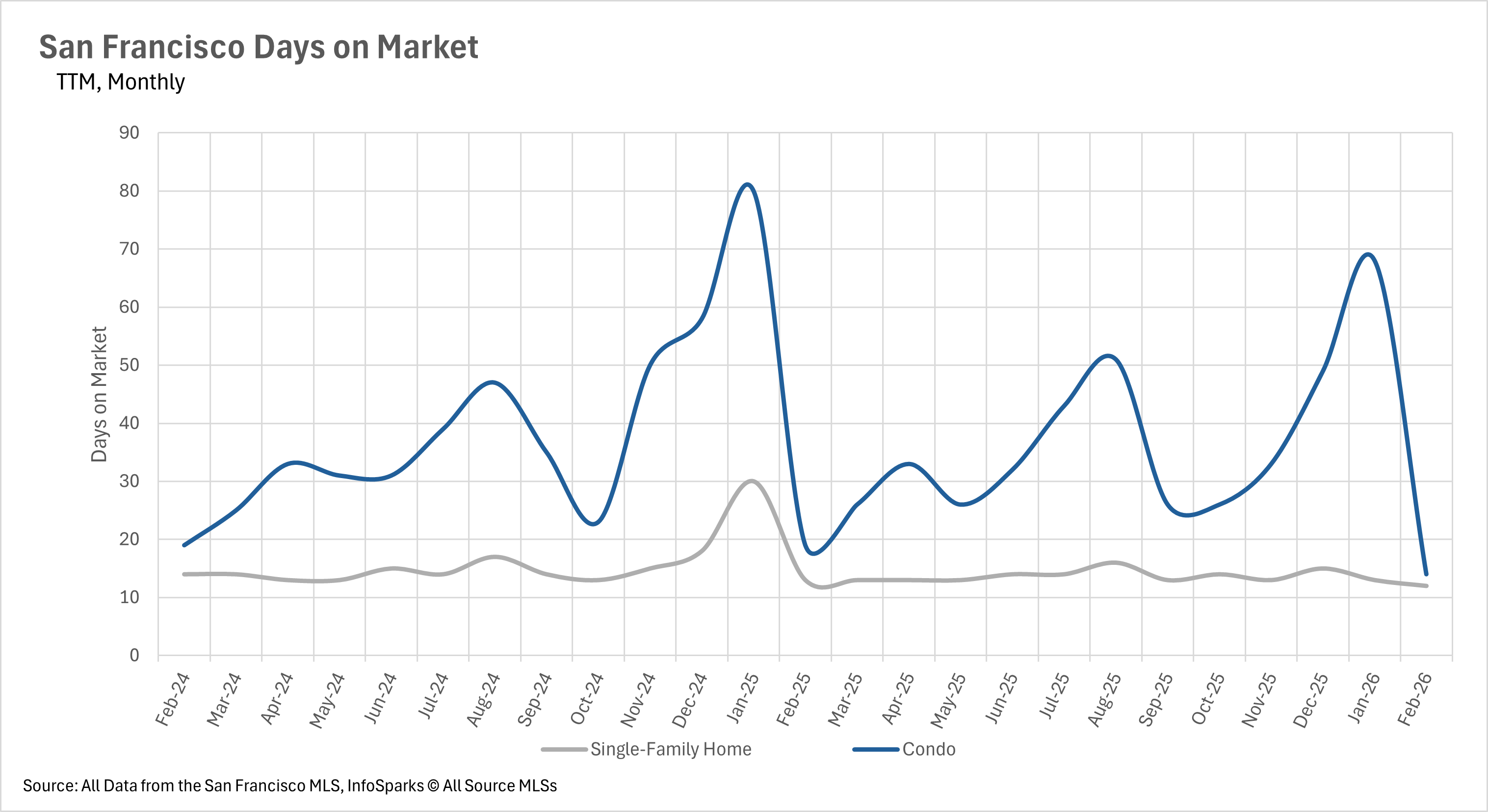
With inventory at such critically low levels, listings are being snapped up almost as soon as they hit the market. The average single-family home is selling in just 12 days, representing a 7.69% decrease compared to last February.
The condo market has seen an even more dramatic acceleration, with the average condo selling in just 14 days, a 26.32% year-over-year decline. This rapid pace means buyers must be prepared to act immediately when a desirable property becomes available, leaving little room for deliberation in this ultra-competitive market.
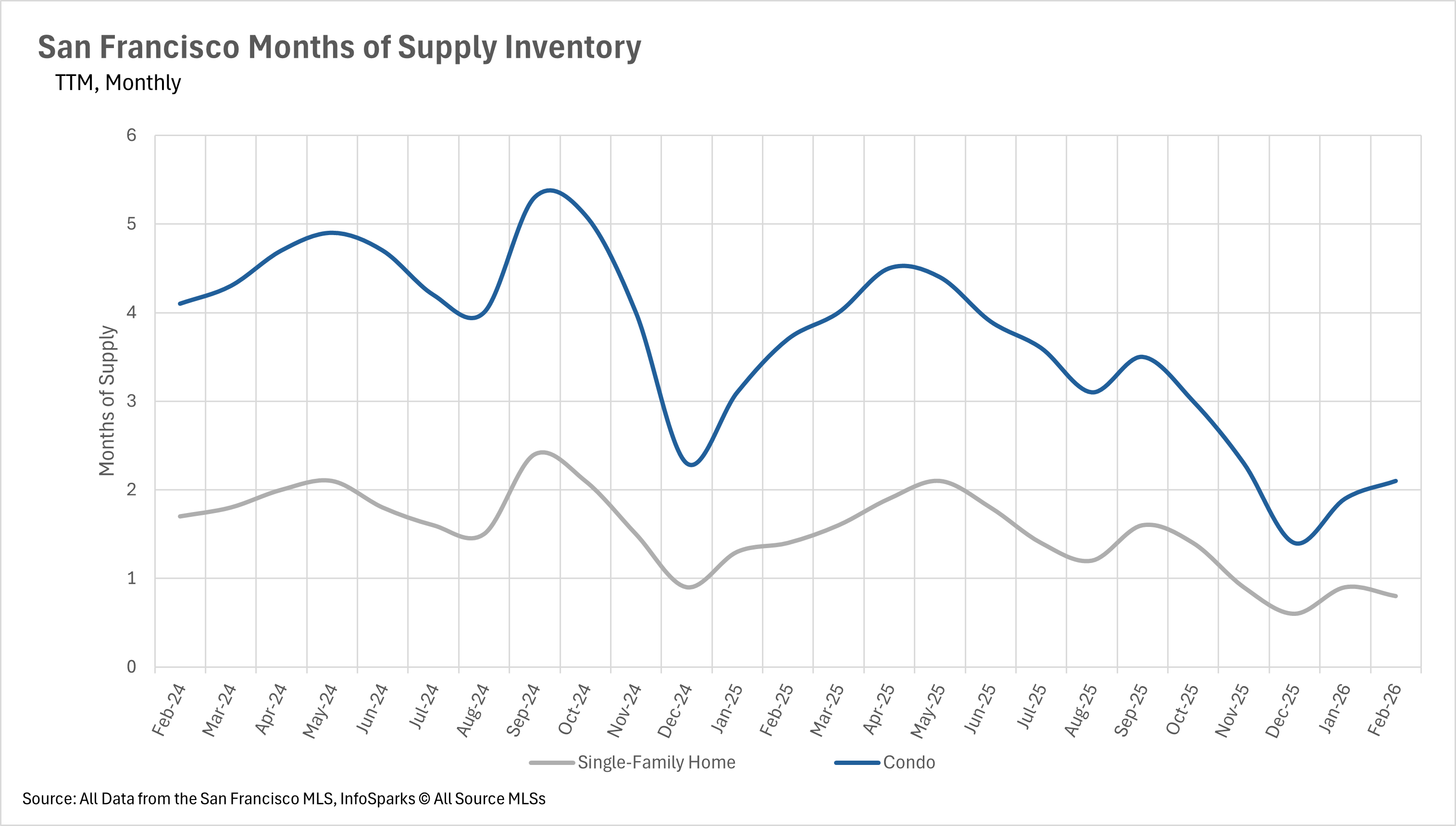
When determining whether a market is a buyer’s market or a seller’s market, we look to the Months of Supply Inventory (MSI) metric. The state of California has historically averaged around three months of MSI, so any area with around three months of supply is considered a balanced market. Markets with less than three months of supply are considered seller’s markets, while markets with more than three months are considered buyer’s markets.
With just 0.8 months of single-family home inventory and 2.1 months of condo inventory on the market, San Francisco remains a deeply entrenched seller’s market across all property types. Both figures represent year-over-year declines of more than 40%, underscoring just how tight conditions have become.
Sellers continue to hold all the leverage in negotiations, and there is no indication that this dynamic will shift any time soon.
With San Francisco starting 2026 in such a competitive position, it helps to look at the bigger picture—and to be ready with the right strategy whether you’re buying or selling. For more context, explore How to Read San Francisco Real Estate Disclosures Like a Pro.
Buyers may also find San Francisco down payment assistance programs and Why Buy With Us helpful, while sellers can explore the Home Sale Calculator, Past Sales, and Testimonials.
Stay up to date on the latest real estate trends.

September 3, 2026
Pacifica home sales slowed in August, but well-priced properties continued to move quickly, with 68% of closed homes selling within 30 days.

September 1, 2026
Discover what makes San Francisco’s Inner Sunset so desirable, from Golden Gate Park and Irving Street to transit, tech shuttle access and Ocean Beach.

August 30, 2026
Explore Mission Terrace’s neighborhood amenities, transportation, community, homes, and 2026 real estate market.

August 21, 2026
A local look at Cole Valley homes, neighborhood favorites, parks, transit and what makes this small San Francisco neighborhood such an appealing place to live.
You’ve got questions and we can’t wait to answer them.