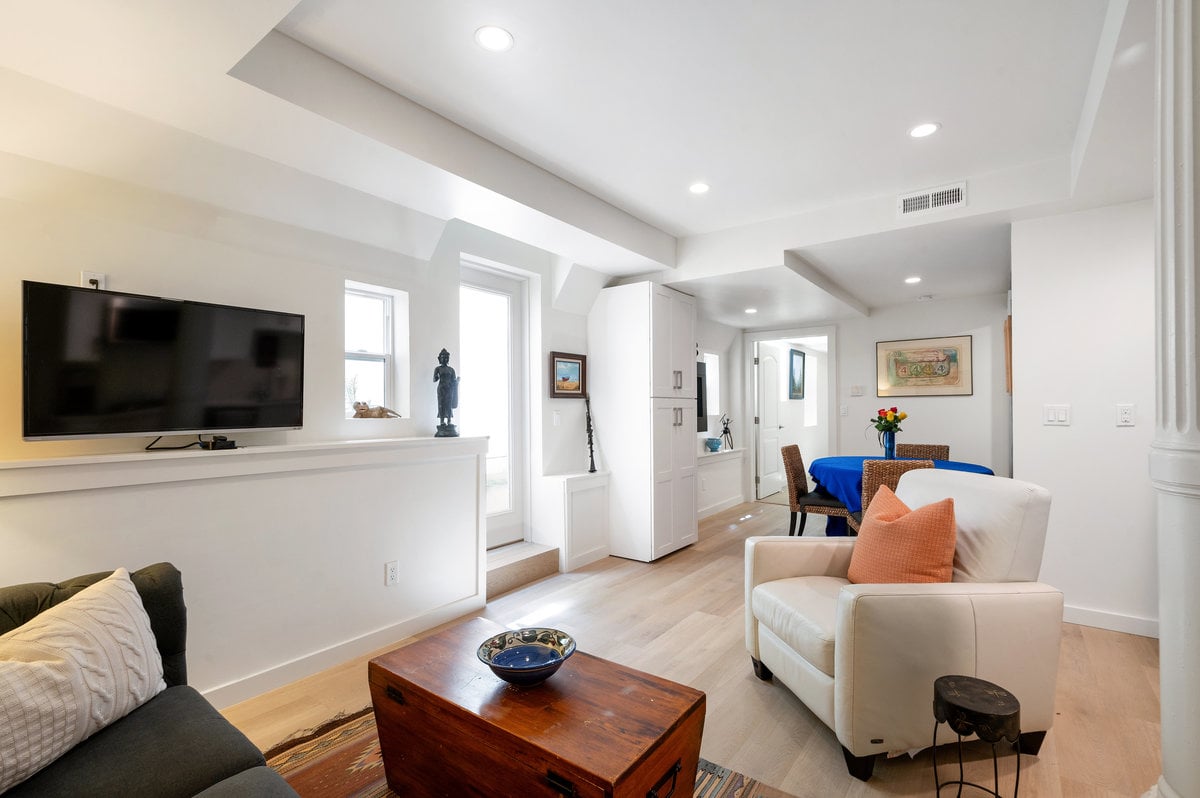
ADU vs. In-Law Unit in San Francisco: A Local Realtor’s Guide
May 1, 2026
May 1, 2026
Carren Shagley, Founder & Associate Broker, Legacy Real Estate
If you’ve followed real estate in San Francisco for any length of time, you’ve probably noticed a shift in how people think about their homes. Conversations that used to revolve around remodeling kitchens or updating finishes now often turn to the term of moment "househacking' or adding usable space, specifically ADUs. That shift isn’t accidental. Housing demand in San Francisco has remained steady for years, and at the same time, many properties have underutilized areas that can be transformed into livable units. As a longtime San Francisco realtor, I’ve watched more homeowners recognize that these spaces aren’t just extra square footage; they’re an opportunity to create long-term, stable income while increasing the overall functionality of their property.
An Accessory Dwelling Unit is a fully legal, self-contained residential unit located on the same lot as a primary home. It includes its own kitchen, bathroom, and private entrance, making it a true independent living space rather than an extension of the main house. The San Francisco Planning Department recognizes ADUs as official housing units, which means they are permitted, inspected, and built according to current building codes. That distinction matters when it comes to financing, insurance, and resale value, because a legal unit is something lenders and buyers can clearly understand and evaluate.
In San Francisco, most ADUs are created through basement or garage conversions, particularly in older homes where that space already exists. Detached backyard units do exist, but they’re less common due to lot size limitations and zoning constraints. Basement conversions tend to be the most practical and cost-effective option because they make use of space that’s already part of the structure.
The term “in-law unit” is widely used in San Francisco, but it doesn’t have a precise legal definition. Historically, it referred to a secondary living space within a home, often used for extended family. The reality is that many of these units were built decades ago without permits, which puts them in a different category than modern ADUs.
The City and County of San Francisco does provide pathways to legalize certain unpermitted units, particularly those built before 2013. However, legalization isn’t automatic. It typically requires inspections, upgrades, and compliance with current safety standards. Once that process is complete, the unit effectively becomes an ADU, bringing it into full legal standing.
Understanding the difference between ADU vs. In-Law Unit in San Francisco comes down to legality and long-term value. An ADU is permitted and recognized from the start, while an in-law unit may exist in a gray area until it is legalized. This distinction affects everything from how a property is financed to how it is marketed and ultimately sold.
From a real estate perspective, a permitted ADU adds measurable value and credibility to a property. Buyers see it as a legitimate income-producing asset, and lenders are more comfortable factoring it into financing decisions. Unpermitted units, on the other hand, can introduce uncertainty. While some buyers may appreciate the extra space, others may view it as a potential liability, especially if it doesn’t meet current building standards.
San Francisco has made noticeable progress in making ADU development more accessible, and the process today is far more straightforward than it once was. Working with the San Francisco Planning Department still requires planning and patience, but the expectations are clearer, and the approval process is more predictable. Homeowners are no longer navigating the same level of uncertainty that existed years ago, which has encouraged more people to move forward with these projects.
One of the most important rules to understand is how ADUs can be rented. The city does not allow short-term rentals of these units, meaning stays must be at least 30 days. This shapes the rental strategy significantly and tends to attract a more stable tenant base. Another notable change is the relaxation of owner-occupancy requirements in many cases, giving homeowners more flexibility in how they use their property over time.
Anyone considering an ADU should start with the city’s official resources, which provide clear guidance on feasibility, permitting, and construction requirements. You can explore them here: https://sfplanning.org/accessory-dwelling-units and https://www.sf.gov/get-a-building-permit-for-an-accessory-dwelling-unit-adu.
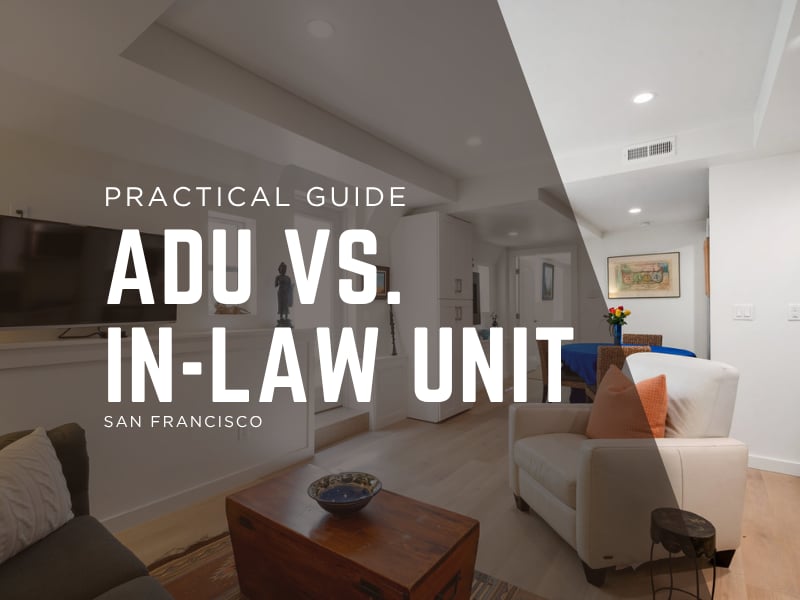
I completed my ADU in Bayview in 2022, at a time when more homeowners were beginning to seriously explore what these units could offer. My basement wasn’t doing much before the project, it was typical unused space that had potential but no real function beyond additional storage. Like many Bayview homes on larger lots, the structure and space was already there; it just needed to be reimagined.
The decision came down to creating flexibility, resale value, and adding a reliable source of income. I wasn’t interested in something that required constant turnover or daily management. At the same time, I was seeing increased demand from professionals drawn to the influx of hospital work off 3rd Street who needed housing for a few months at a time, which made the idea of a mid-term rental feasible.
The conversion focused on making the space feel like a true home rather than a secondary area. That meant improving light, ensuring a private entrance, and making the layout functionable for everyday living. Like most construction projects in San Francisco, it took time (project was completed within six months), required capital, and patience, but once completed, it changed the overall utility of the property in a meaningful way.
I focused on mid-term tenants, which has proven to be a more stable and predictable approach.
I chose Furnished Finder because it connects homeowners with professionals who are looking for furnished housing for 30 days or longer. This includes travel nurses, educators, and remote workers. That aligns well with what an ADU offers and creates a more consistent rental experience overall.
Rental income varies depending on the specifics of the unit, including its size, layout, level of furnishing, and overall condition. I’ve found that pricing at fair market rent leads to the best results. It keeps the unit competitive while maintaining steady occupancy.
The two biggest advantages are additional income and flexibility. An ADU can help offset the cost of owning property in San Francisco while also giving homeowners options for how they use their space. Whether it’s renting, housing family, or adapting the unit over time, that flexibility becomes increasingly valuable.
Costs and timelines are the two areas where expectations often need adjusting. Permitting takes time, and construction can take longer than planned. Budgeting conservatively and allowing for some flexibility in the timeline can make the process far less stressful.
The first step is understanding what your property can realistically support. That means evaluating the space, consulting with professionals, and reviewing city guidelines before moving forward. From there, it becomes a process of planning, permitting, and construction.
If you’re thinking about adding an ADU and want to understand what’s actually possible on your property, I’m happy to be a resource. I can help you evaluate your space, walk you through the permitting process with the San Francisco Planning Department, and connect you with contractors who have experience building ADUs here in San Francisco. Feel free to reach out, a quick conversation can save months of guesswork.
No, an ADU is fully permitted and legal, while an in-law unit may not be.
No, rentals must be at least 30 days.
Most projects take several months to over a year. My conversion took six months of construction and one month for approval once the paperwork was submittted.
Yes, fully permitted liveable spaces add value to your property.
Yes, particularly for basement conversions and mid-term rentals.
It was the right choice for me. For many homeowners, the income and flexibility make it a strong investment.
From my experience, taking the time to build a permitted ADU and aligning it with a realistic rental strategy creates a reliable and sustainable outcome. What started as underused garage space has become a consistent and practical part of the property, and that’s ultimately what most homeowners are looking for.
Stay up to date on the latest real estate trends.

May 21, 2026
Breaking down home prices, condo trends, inventory levels, and buyer activity across San Francisco.

May 12, 2026
April 2026: Home Sales Jump & Median Single Family Home Prices Hold Steady
May 7, 2026
What buyers — and visitors — actually need to know about the Inner Sunset
May 1, 2026
A practical look at San Francisco ADU rules, permitting, and rental strategy—based on my experience converting a Bayview basement into a steady mid-term rental.
You’ve got questions and we can’t wait to answer them.