San Francisco Real Estate Market Update | June 2026
June 24, 2026

June 24, 2026
Note: National Association of REALTORS® data is released approximately two months behind. The most recent month may include estimated data where appropriate.
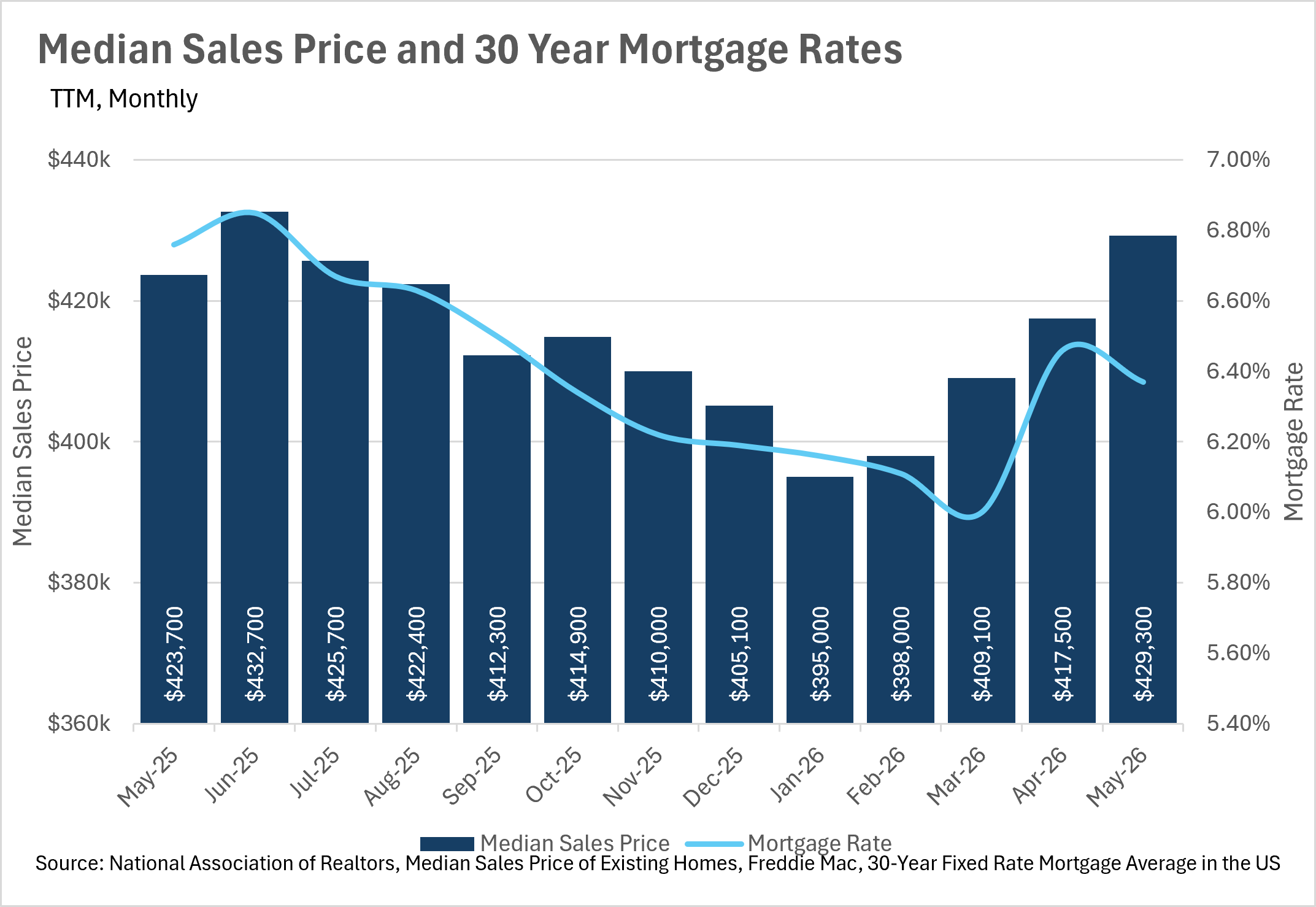
The spring housing market has delivered the kind of price growth many sellers were hoping to see. The median home sale price reached $429,300 in May, representing a 2.83% increase from April and a 1.32% gain compared to one year ago.
This marks the fourth consecutive month of price appreciation since the market bottomed out at $395,000 in January and represents the highest median sale price recorded since last summer.
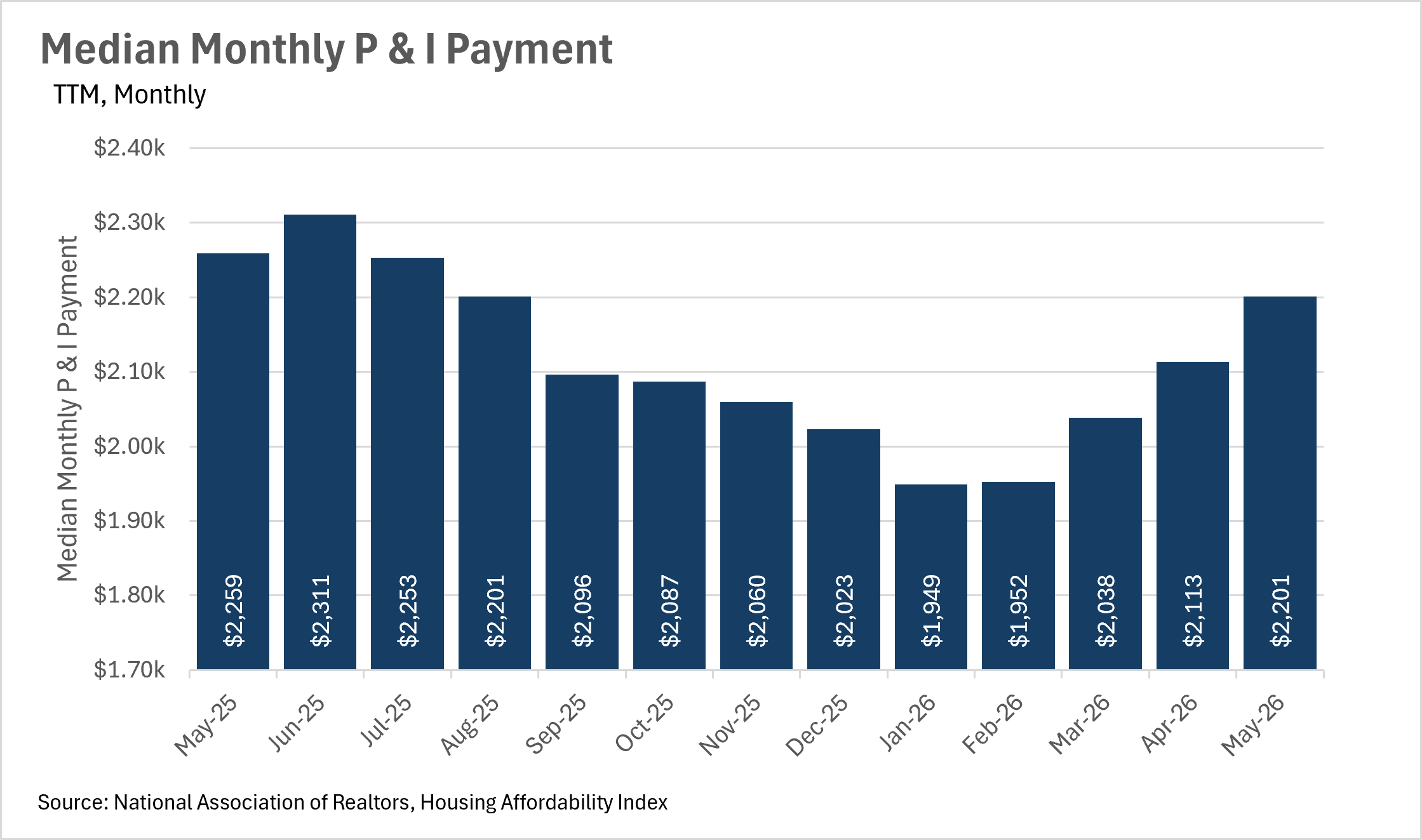
One factor supporting this growth has been mortgage rates. After peaking in April, rates eased slightly to 6.37% in May, down from 6.76% one year ago. However, affordability remains a challenge. The median monthly principal and interest payment was $2,201, only modestly lower than the $2,259 paid by homeowners last year.
As home prices continue climbing, some of the affordability gains created by lower mortgage rates are beginning to diminish. This balance between pricing and affordability will remain an important trend to watch through the summer months.
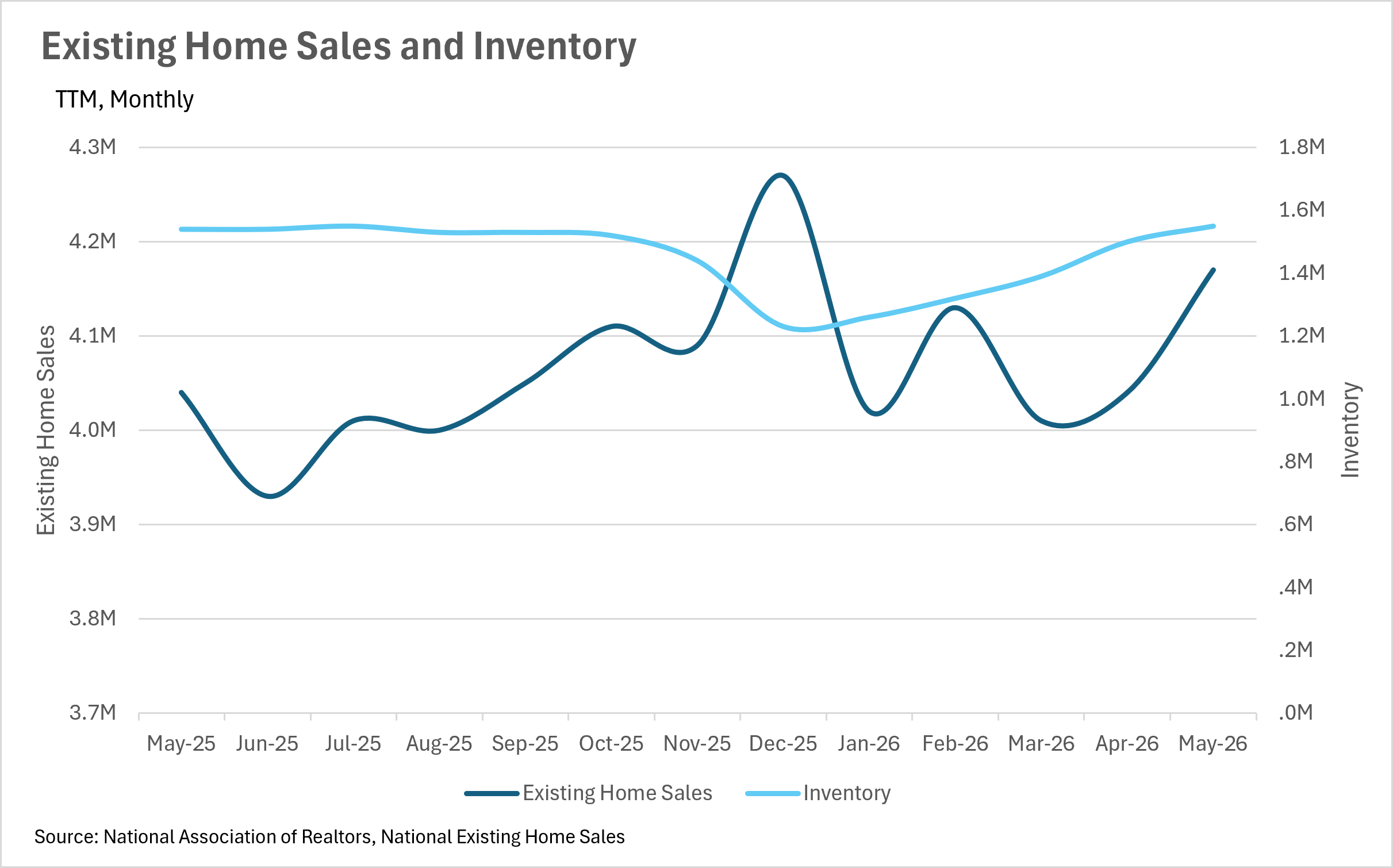
After lagging behind throughout much of the winter and early spring, housing inventory has finally caught up with last year's supply levels.
In May, approximately 1.55 million homes were available for sale nationwide, representing a 0.65% year-over-year increase and a 3.33% increase from April.
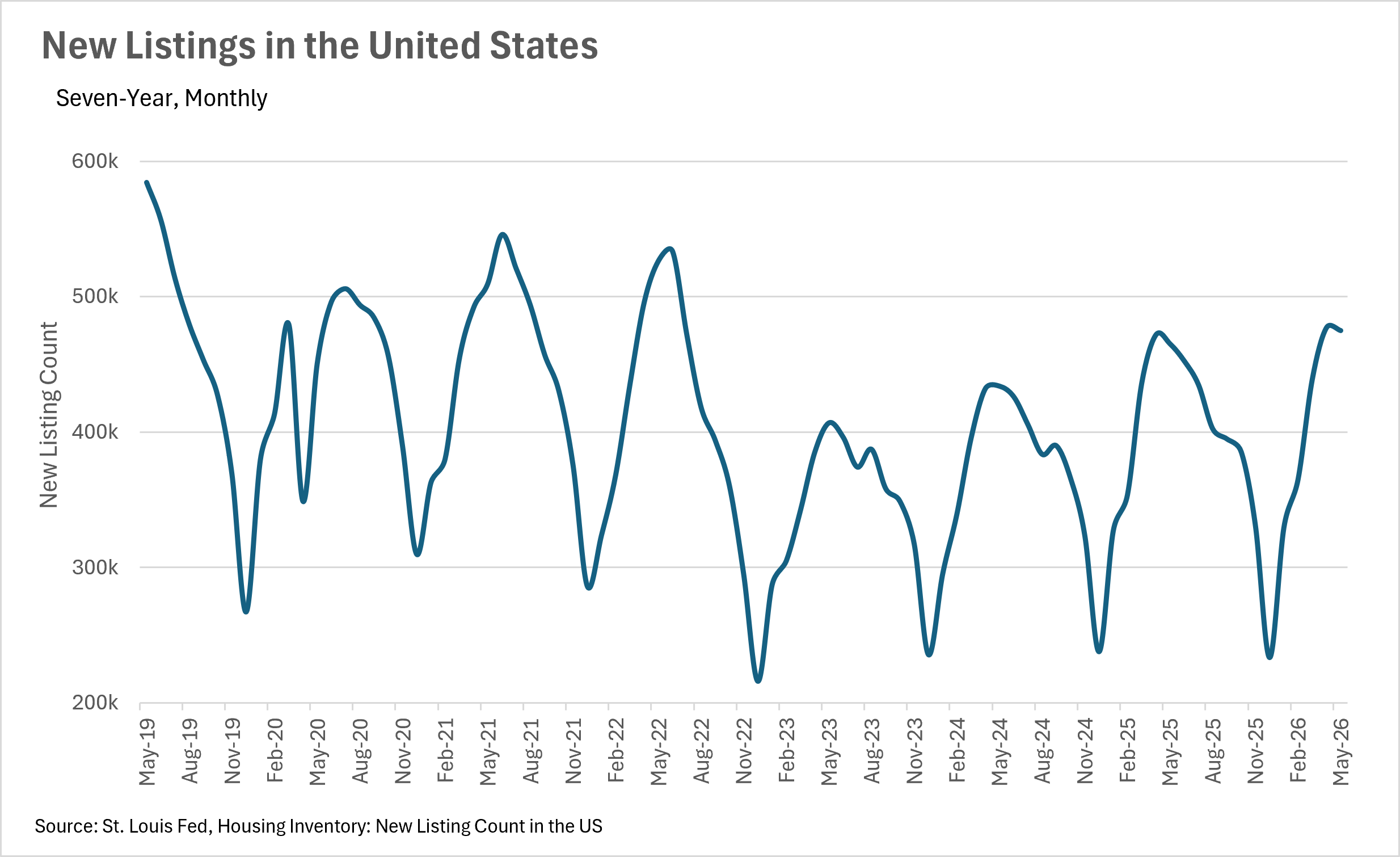
New listings also remained healthy, with 474,976 homes hitting the market, a 2.12% increase compared to last year. While that figure was slightly below April's pace, it suggests that sellers remain active despite shifting market conditions.
If inventory continues building through June and July, buyers could enjoy the widest selection of homes available in several years.
One of the most encouraging signs this month was the improvement in existing home sales.
In May, approximately 4.17 million homes changed hands, representing a 3.22% increase both month-over-month and year-over-year.
The increase suggests that lower mortgage rates and improved inventory levels are beginning to bring buyers back into the market after a prolonged period of hesitation.
May's sales volume was the strongest recorded since December's seasonal year-end surge, indicating that demand remains healthy despite affordability challenges.
Looking ahead, mortgage rates remain the biggest variable. Additional rate declines could further stimulate demand, while rising rates could slow momentum heading into the second half of the year.
One of the best ways to measure market conditions is through Months of Supply Inventory (MSI).
Historically, approximately three months of inventory is considered a balanced market:
At the national level, both inventory and sales activity are increasing simultaneously. As a result, market conditions remain relatively balanced.
Whether the market shifts more strongly toward buyers or sellers will largely depend on mortgage rates. Falling rates could increase competition and strengthen seller leverage, while rising rates could allow inventory to accumulate and create more opportunities for buyers.
As always, real estate remains highly local, making it important to understand what's happening in your specific market.
Note: Charts and graphs referenced below can be added at the end of this section.
San Francisco's single-family home market continues to post remarkable gains.
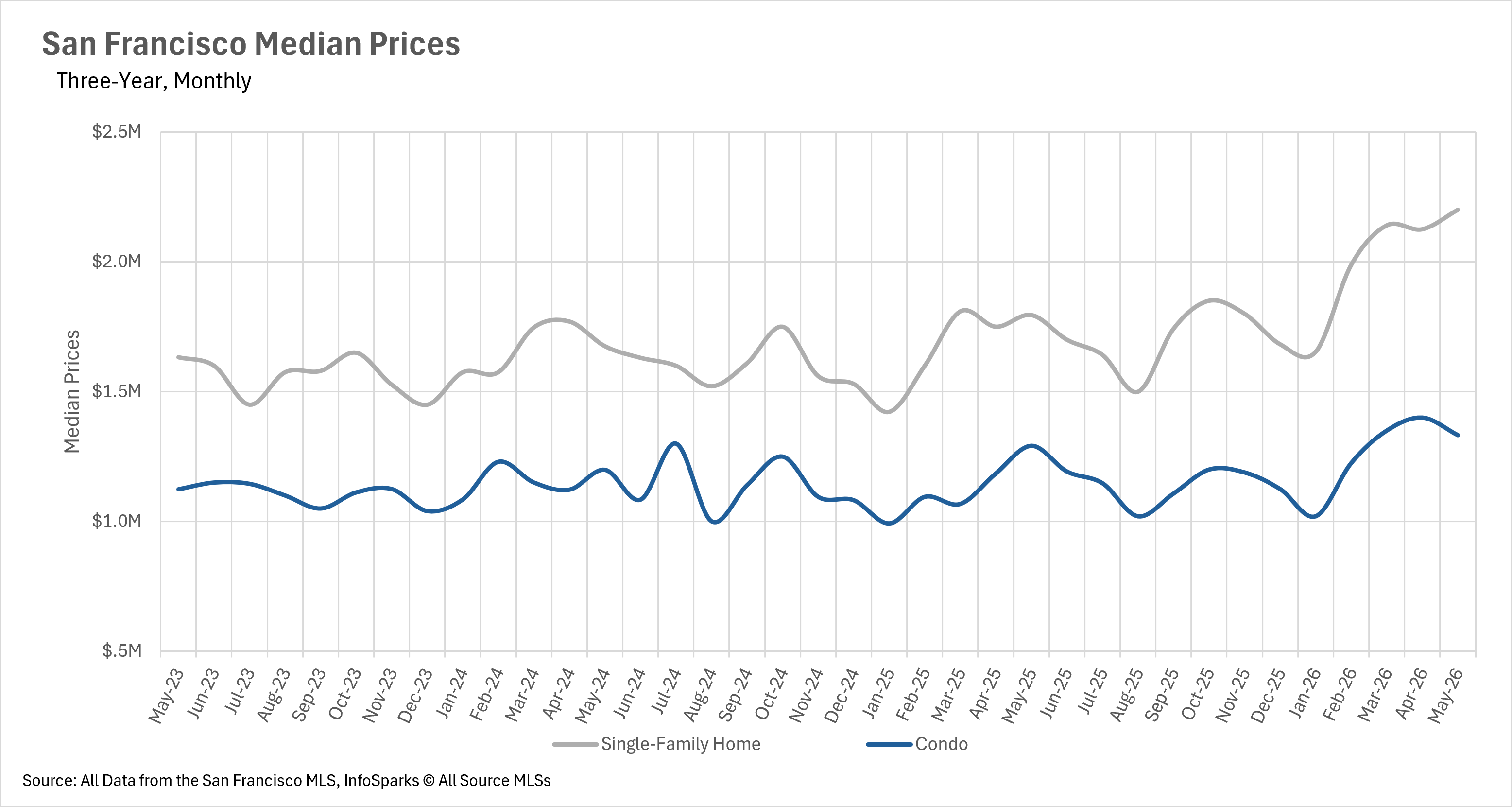
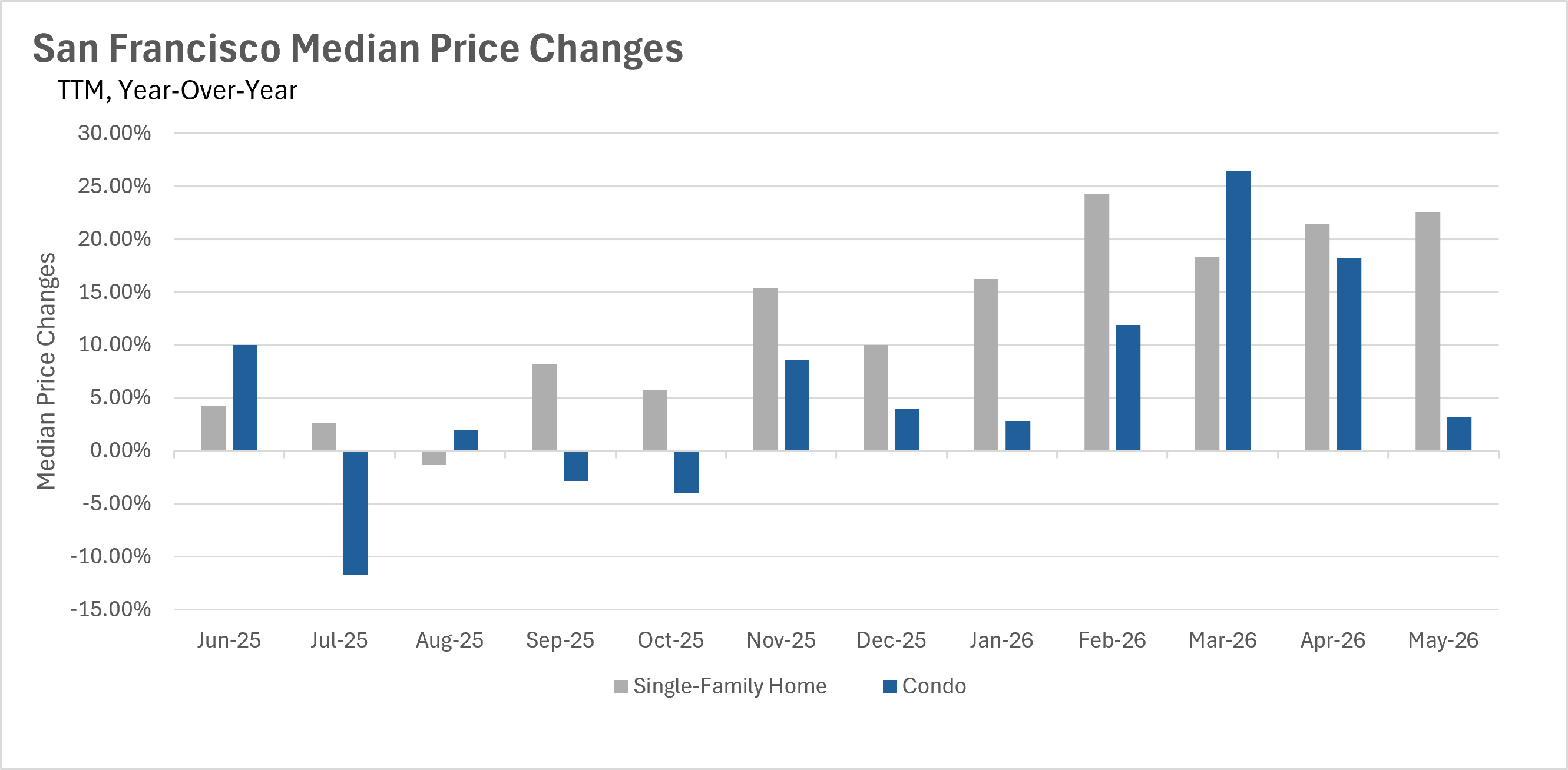
The median single-family home sale price reached $2,200,000 in May, representing a 22.56% increase year-over-year and one of the strongest annual gains in recent memory.
The condominium market also experienced positive growth, with the median condo sale price rising to $1,332,500, a 3.17% increase compared to last year.
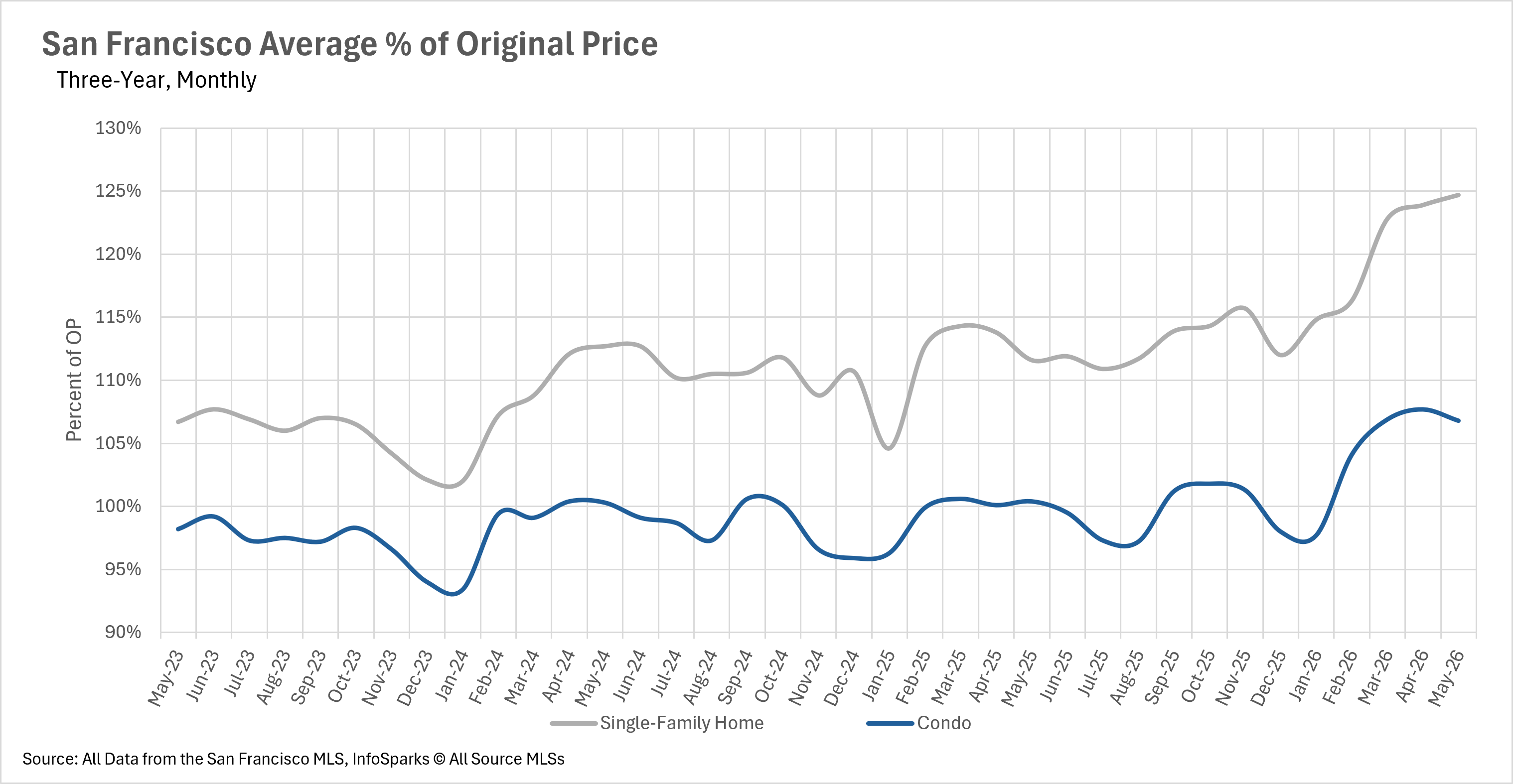
Competition remains fierce across all property types:
These premiums highlight the continued demand from buyers competing for limited inventory throughout the city.
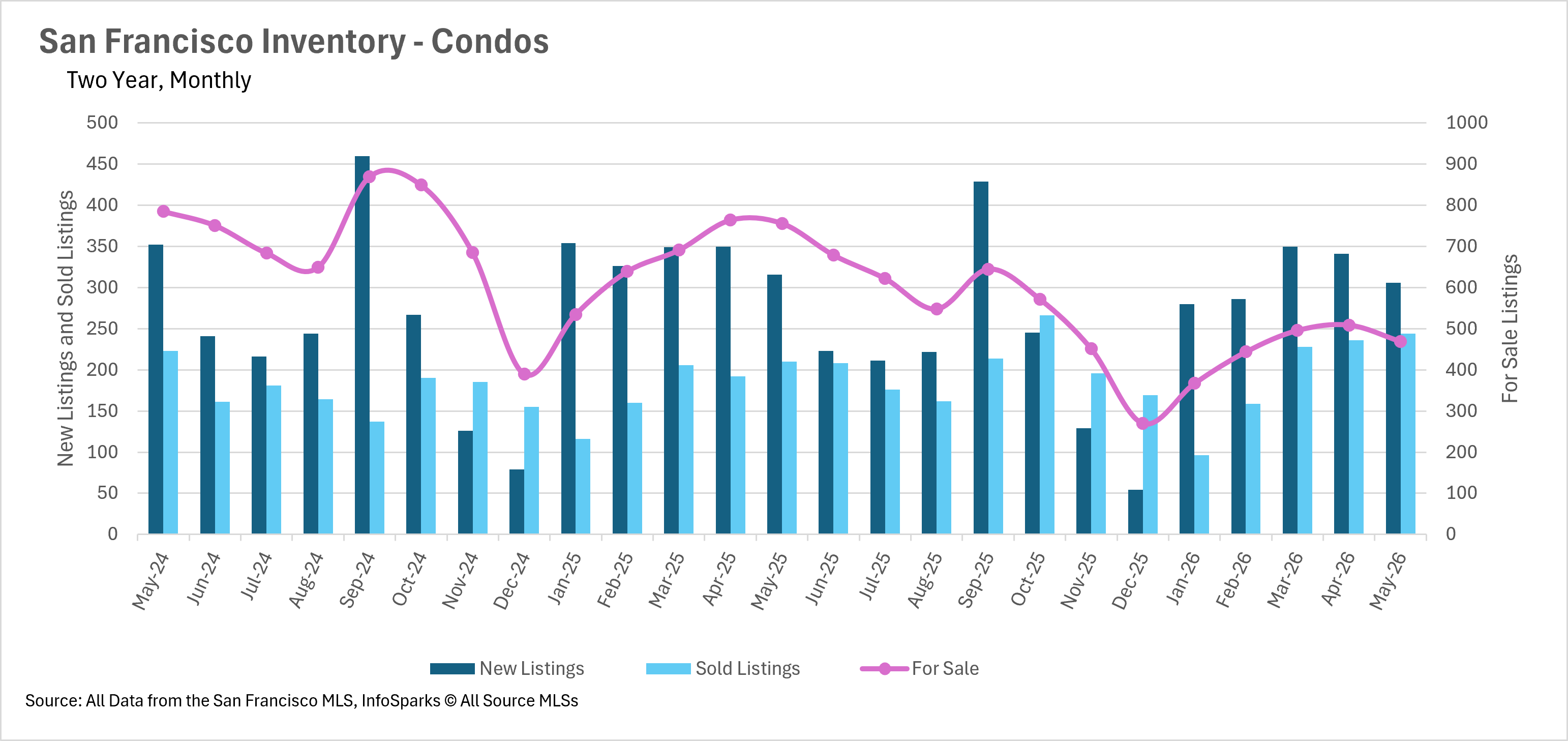
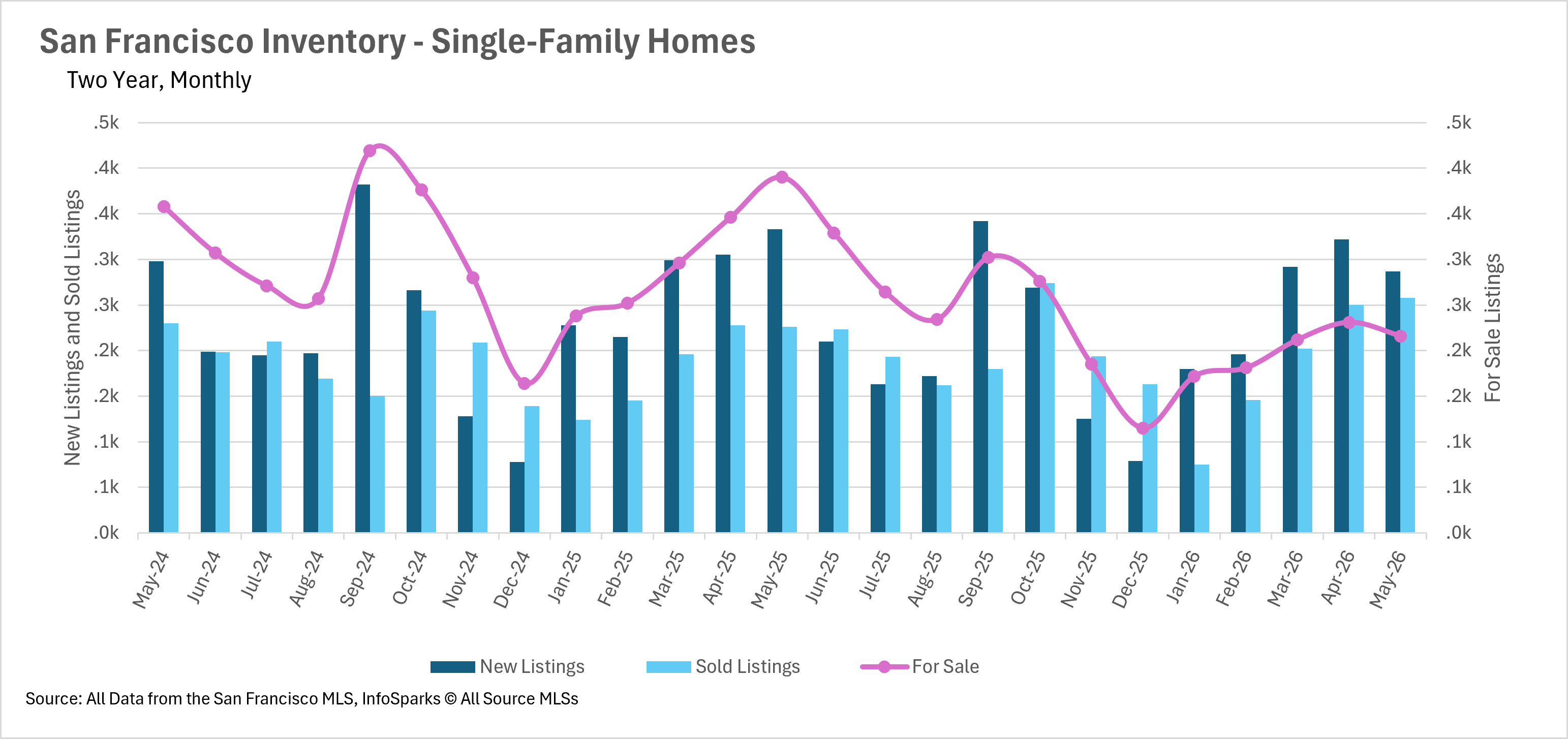
San Francisco's inventory shortage remains one of the defining stories of 2026.
As of May:
Combined, fewer than 700 homes were available for sale across all of San Francisco.
For sellers, these conditions create a favorable environment with limited competition. For buyers, finding suitable inventory remains one of the biggest challenges in today's market.
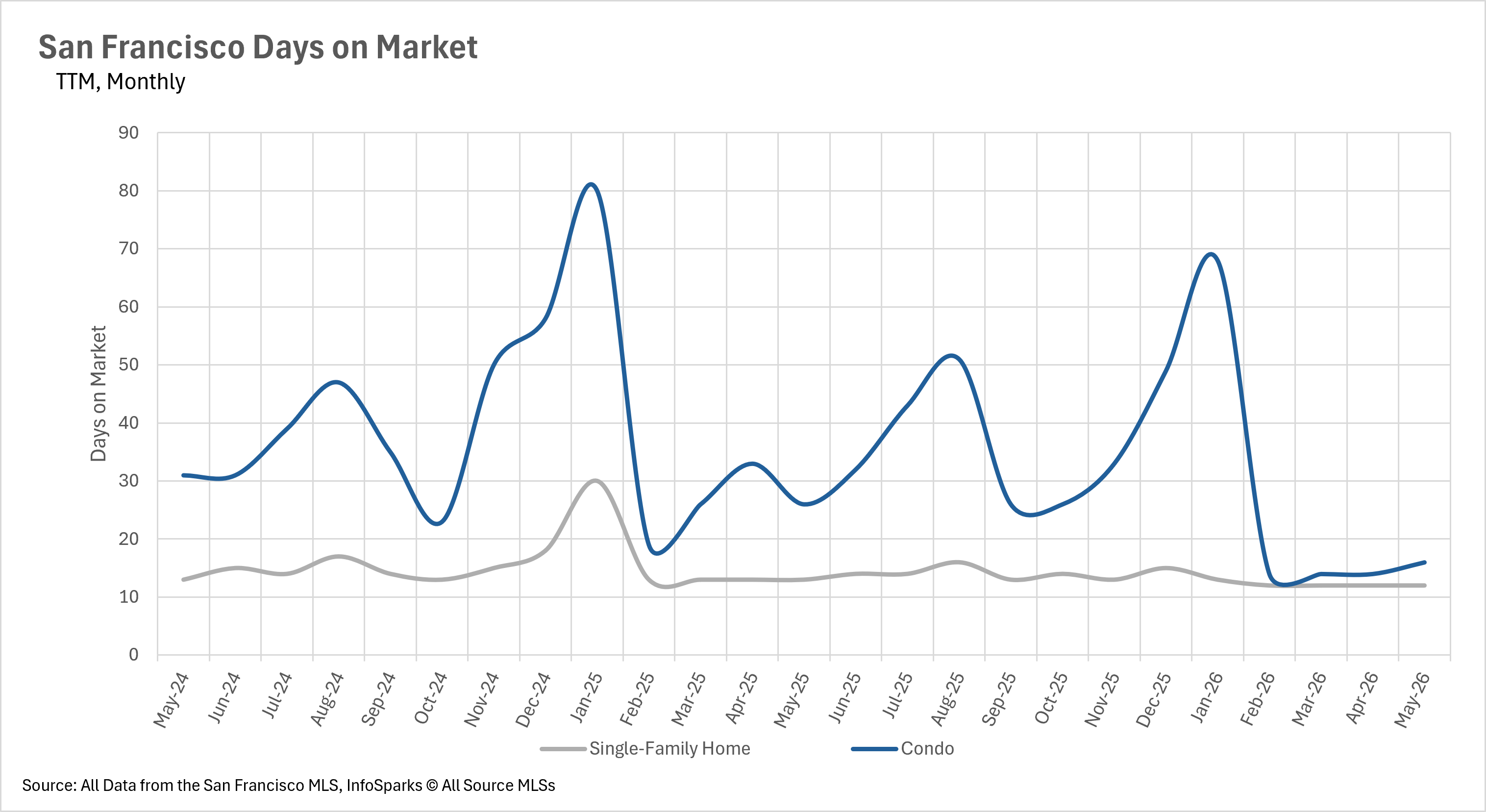
With inventory at critically low levels, buyers must move quickly.
The average single-family home sold in just 12 days, a 7.69% improvement from last year.
Condominiums moved even faster, with the average condo selling in only 16 days, representing a 38.46% year-over-year decrease in market time.
For perspective, the average condo spent 26 days on market just one year ago.
This accelerated pace leaves buyers with limited time to evaluate options and often requires strong, well-prepared offers.
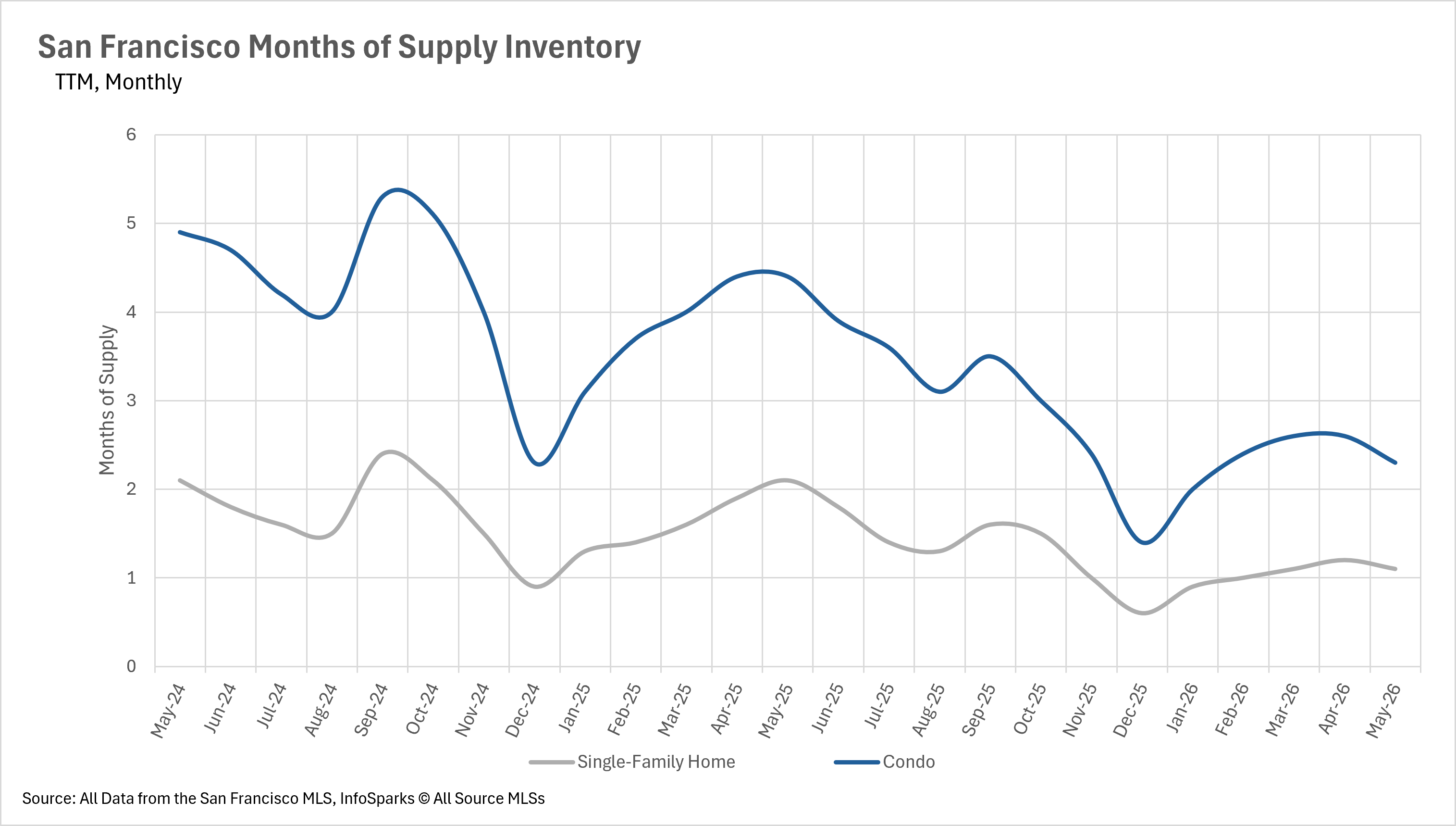
Months of Supply Inventory (MSI) continues to demonstrate just how competitive the San Francisco market has become.
Current inventory levels include:
Both figures are down nearly 48% year-over-year.
Perhaps most notable is the condominium market's transformation. Just one year ago, condos had approximately 4.4 months of inventory, placing that segment closer to buyer-friendly territory. Today, the condo market has shifted firmly into seller's market conditions.
Until inventory expands meaningfully, sellers are likely to maintain the advantage in negotiations throughout the city.
San Francisco's housing market continues to demonstrate exceptional resilience despite broader economic uncertainty.
For sellers, low inventory, strong buyer demand, and rising home values continue to create favorable conditions for maximizing sale price.
For buyers, preparation is critical. Financing, disclosures, and offer strategy all play an increasingly important role when homes are selling quickly and attracting multiple offers.
Whether you're considering buying, selling, or simply evaluating your options, understanding local market conditions is key to making informed real estate decisions.
Every neighborhood behaves differently, and market conditions can vary dramatically from Bernal Heights to Noe Valley, Dogpatch, Glen Park, Pacific Heights, and beyond.
If you're curious about your home's current value or want to discuss your next move, we'd be happy to help you understand what today's market means for your goals.
Contact Jennifer Burden or Carren Shagley, Founders of Legacy Real Estate for a personalized market consultation.
Stay up to date on the latest real estate trends.

September 30, 2026
Explore the vibrant neighborhood surrounding Dolores Park, from local markets and restaurants to green spaces and everyday city living.

September 25, 2026
While the national market cools, San Francisco continues to see strong demand, limited inventory, and a competitive market.

September 17, 2026
Understanding the Key Differences Before You Buy in San Francisco

September 3, 2026
Pacifica home sales slowed in August, but well-priced properties continued to move quickly, with 68% of closed homes selling within 30 days.
You’ve got questions and we can’t wait to answer them.